Livestream Shopping: What is it & How to Succeed at it
Livestream shopping combines live video, real-time interaction, and e-commerce to create a shopping experience where viewers can discover products, ask questions, and make purchases during a live broadcast.
Unlike traditional online shopping, where customers rely on product pages, images, and reviews, livestream shopping gives shoppers the opportunity to see products demonstrated in real time and interact directly with the people presenting them. For retailers, it creates a direct connection between content, community, and commerce, turning existing audiences into active shoppers.

Quick Summary
Livestream shopping brings together live video and e-commerce in a format that is more engaging, more trusted, and more effective at converting viewers into buyers than static product pages alone.
A host presents products in real time, viewers ask questions and get immediate answers, and purchases happen directly within the stream. For brands in the European market and beyond, it represents a practical, scalable way to turn existing social audiences into measurable revenue. Sprii's platform is built specifically for this — helping retailers run fully shoppable live events across Facebook, Instagram, and their own websites from a single broadcast.
What is livestream shopping and how it works
Livestream shopping / Livestream selling, often referred to as live social shopping, liveshopping, or live selling, is a form of e-commerce that combines the convenience of online shopping with the interactivity of live video streaming.
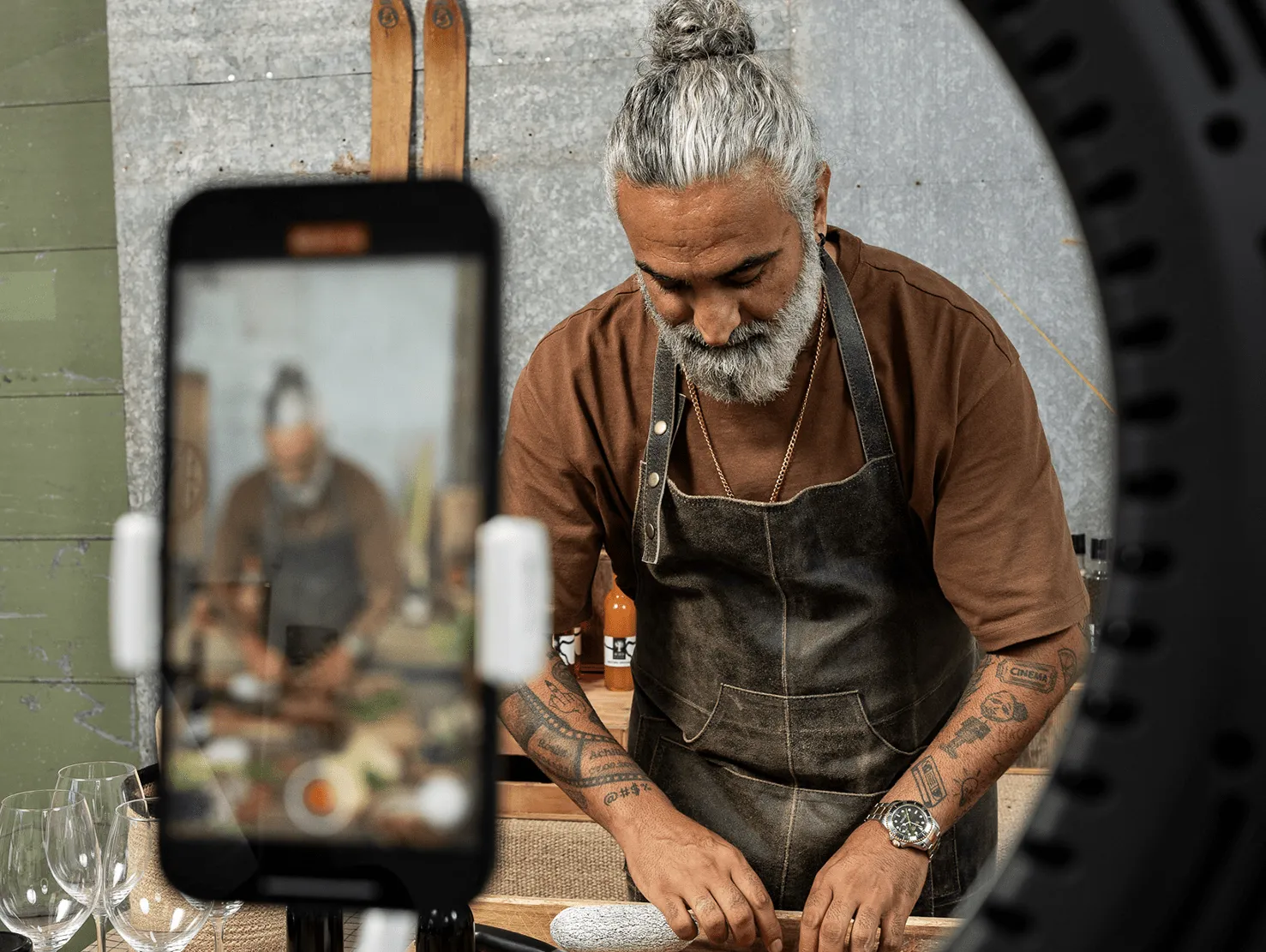
Simply put, it involves a live video broadcast of a product or service, typically hosted by a brand or individual, where viewers can watch the host demonstrate and discuss the product in real time, ask questions, and make purchases — all within the same stream.
In a typical live shopping stream, the host showcases different products or services, highlighting their features and benefits while providing a live demonstration. Viewers can engage through live chat, ask questions about the product, and receive answers immediately. The host can then provide personalised recommendations based on what viewers are asking. If a viewer decides to make a purchase, they can do so directly within the platform, without navigating away from the stream.
This combination of real-time interaction, product demonstrations, and integrated checkout is what makes live shopping fundamentally different from browsing a webshop, and why brands running live shopping events consistently see stronger engagement and higher conversion rates than they do with static content.
From TV shopping networks to livestream retail
The format of live stream shopping has older roots than most people realise. Television shopping networks like HSN and QVC pioneered host-led product demonstrations paired with real-time purchasing by phone in the 1980s — the core psychology of live stream retail, connecting a trusted host with an engaged audience, was established long before the internet existed.
The digital shift came in 2016 when Taobao Live, Alibaba's live streaming e-commerce platform, linked live broadcasts directly with integrated checkout, replacing phone orders with live chat interaction and algorithmic product targeting. That combination of immediacy, interactivity, and frictionless buying proved extraordinarily effective. Taobao Live now commands over 60% of China's live commerce market. .
COVID-19 lockdowns accelerated adoption in Europe and North America by making mobile-first live video the closest available substitute for the in-store experience. Brands that had never considered live stream shopping found themselves experimenting out of necessity — and many found that it worked.
What has changed since the TV era is simple: modern tech makes buying instant. Shoppers can watch on their phones, interact directly on social media, and check out in seconds without leaving the stream. Yet the underlying dynamic, trust, live demonstration, and real urgency, remains exactly the same.
How fast livestream shopping is growing globally
Livestream shopping is a growing channel worldwide, and it has been gaining momentum in recent years. With the COVID-19 pandemic accelerating the shift to online shopping over in-person, more consumers and especially Gen Z are turning to Live Shopping as a way to experience products and interact with brands in real time.
China
China is the world's largest market for live streaming commerce, with livestream sales projected to reach over 25% of China's total gross merchandise value. Many Chinese consumers have embraced live shopping as a fun and convenient way to shop (shoppertainment), with some tuning in daily to watch their favourite hosts showcase products. The market value of live stream e-commerce globally is expected to reach 3,7 trillion dollars in 2030.
Taobao Live dominates the livestream market with over 60% market share, making it the benchmark that live commerce platforms globally are measured against.
Europe
In Europe, livestream shopping is quickly gaining popularity. In the UK, retailers such as John Lewis, Marks & Spencer and ASOS have experimented with live shopping streaming, and the trend is expected to continue to grow.
Scandinavia has seen an explosion in popularity for live stream shopping, with companies such as Coop, Matas, Søstrene Grene and Coolshop running multiple livestreams a month.
In a survey in 2021, 70% of European consumers were open and positive towards live stream purchases — making this a particularly compelling market for brands ready to invest in livestream marketing and live video sales.
North America
In North America, livestream shopping is still a relatively new concept, but it is gaining traction. In the US, major retailers such as Nordstrom, Walmart, and Amazon have started experimenting with live shopping as a way to engage with customers and drive sales.
Latin America
In Latin America, live streaming commerce is also starting to take off, with Brazil leading the way. Retailers such as Magazine Luiza and Americanas have already embraced live shopping streaming, with many others expected to follow suit. The trend is also gaining popularity in Mexico and Argentina.
In a survey in 2021, 10% of Brazilian consumers had watched a livestream shopping session, and almost 90% of them would do it again in the future. Just a year later, 62% of online consumers in Brazil had engaged with social commerce, and 24% of those who hadn't were interested in doing so.
Why brands see stronger results with live streaming selling
The performance gap between live shopping and conventional e-commerce is significant.
McKinsey research shows live commerce conversion rates approaching 30% — up to ten times higher than the 2–3% typical of standard online retail. Instagram data indicates that live shopping events convert at up to 23% higher than static posts. These are not marginal improvements; they reflect a fundamentally different buying experience.
Return rates tell a similarly clear story. In traditional e-commerce, buyers make decisions based on static images and written descriptions that often fail to convey fit, texture, or real-world scale. When a host handles a product on camera, demonstrates it in use, and answers specific viewer questions in real time, buyers know exactly what they are getting.
Another thing that brands using Live Shopping experience is lower return rates below 10%, well below typical e-commerce averages, this is because live demonstration sets accurate expectations before the purchase.
Beyond conversion and return rates, live shopping creates urgency that passive browsing cannot replicate. Limited-time offers, live inventory countdowns, and the social energy of watching alongside other viewers all accelerate purchase decisions.
Brands across fashion, health and beauty, home and decor, and food and beverage categories on Sprii report increased average order value and stronger repeat purchase behaviour — signals that live shopping shows brand authenticity and builds the kind of customer relationships that extend well beyond a single event.
To understand more about how livestream shopping works in practice, a deeper look at its mechanics reveals why these results are so compelling.
Which platforms support livestream shopping
The live stream landscape includes both major social platforms and dedicated live commerce software, and the right choice depends on where your audience is and how much control you want over the experience.
There are two main ways to get started with livestream shopping: going live natively on a social platform or using dedicated live commerce software:
Going live natively on social platforms
Going live natively means broadcasting directly through a social platform’s own livestreaming feature without using dedicated live shopping software. Viewers can watch, comment and react within the app, making it an accessible way to engage an existing audience.
However, livestreaming is not necessarily Live Shopping. Some platforms provide product tagging and checkout features, while others require brands to direct viewers to a webshop or use additional software.
Facebook and Instagram are useful for reaching established communities, but their native live features offer limited e-commerce functionality.
TikTok LIVE Shopping lets eligible sellers add products to livestreams and enable in-app purchases where TikTok Shop is available. But sellers often have to rely on heavy discounts.
YouTube Live allows eligible channels to tag and feature products during broadcasts, making it suitable for established creators and brands.
Amazon Live combines product demonstrations with a shoppable carousel inside Amazon’s marketplace but this is heavily US-focused.
Twitch live shopping offers access to engaged gaming and entertainment communities but has limited native shopping functionality.
Going live natively is simple and gives brands direct access to audiences they have already built. However, commerce features vary by platform, while control over customer data, checkout and the overall shopping experience remains limited.
Another way to power livestream commerce is by using a dedicated live streaming shopping platform.
Using dedicated livestream shopping platform
Dedicated live commerce software gives brands more control over how they run, manage, and measure livestream shopping. It let's you add shopping functionality that social platforms do not always provide natively. It connects the livestream with a brand’s product catalogue, webshop and checkout, allowing viewers to discover products and move towards purchase while watching.
Depending on the platform, brands can host shoppable livestreams on their own website, add product cards and interactive features, collect first-party data and track performance beyond views and comments. This gives them greater control over the customer journey, branding and shopping experience.
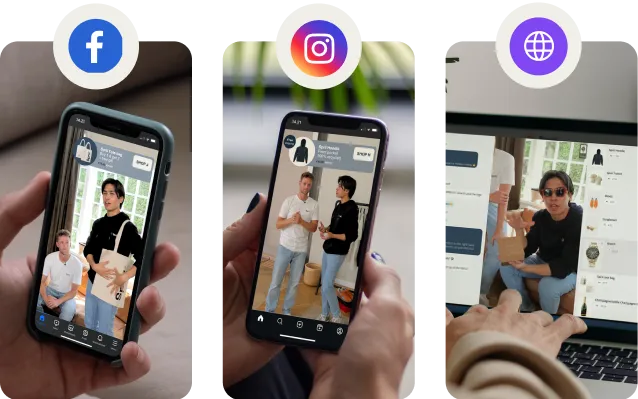
Some solutions also connect social and owned channels. With Sprii, for example, brands can broadcast across Facebook, Instagram and their website from one backend. This combines the reach and engagement of social media with a fully branded shopping experience on the brand’s own webshop.
The right solution depends on whether a brand needs multichannel streaming capabilities, which e-commerce systems it uses, and how much control it requires over data, checkout, and viewer experience.
Learn more about the different platforms to find our which one would suit your need: livestream shopping apps.
Content formats that drive livestream selling results
The best Live Shopping shows give viewers more than a series of products and prices. They combine useful information, entertainment and interaction in a format that suits both the audience and the products.
Formats to consider include:
- Product demonstrations: Show the product in action, explain important features and help viewers understand how it could fit into their lives.
- Tutorials and how-to sessions: Teach viewers something useful while naturally introducing relevant products. This works particularly well for beauty, fashion, electronics and home products.
- New product launches: Build anticipation around new collections, seasonal releases or limited-edition products and let viewers be among the first to see them.
- Expert Q&As: Invite a product specialist, founder or industry expert to answer questions and help remove uncertainty before purchase.
- Creator takeovers: Let a creator or influencer host the show, share recommendations and introduce the products to their community.
- Behind-the-scenes shows: Give viewers access to product development, buying decisions, production or everyday life inside the brand.
- Games and competitions: Use quizzes, giveaways and viewer challenges to encourage comments and keep the audience engaged.
- Live-exclusive offers: Introduce limited bundles, timed deals or special perks that give viewers a reason to purchase during the broadcast.
The strongest shows often combine several of these formats. A product launch could include demonstrations, an expert Q&A, a competition and an exclusive bundle. The important thing is to create enough variation to keep viewers involved while giving them clear reasons to buy.
Across all formats, the shows that perform best share common habits: you picked a camera-ready product mix, a trained and engaging host, pre-show promotion across owned channels, and a follow-up with viewers within 24 hours.
Sprii's team provides dedicated onboarding, strategy sessions, and show production assistance to help brands execute each format from the first event onward. For a closer look at emerging live shopping trends, the formats gaining momentum right now offer useful direction for planning your next show.
Keeping viewers engaged throughout a live show
Real-time, two-way communication is what separates a Live Shopping event from a pre-recorded video. When viewers can ask questions, receive answers and influence the show, they move from passive watching to active participation.
Hosts can respond to objections as they arise, personalise recommendations based on the comments and resolve uncertainties that might otherwise prevent a purchase.
To maintain engagement and keep viewers watching throughout the broadcast:
- Start with a strong hook: Show an exciting product, preview what is coming or tease a competition or exclusive offer.
- Keep the conversation two-way: Use live chat, emoji reactions, polls and Q&As to invite participation—and acknowledge viewers by name when responding.
- Vary the content: Alternate between demonstrations, stories, questions, competitions and offers instead of presenting one product after another.
- Let viewers influence the show: Ask the audience which product, colour or styling option they would like to see next.
- Surface products at the right moment: Use product overlays while an item is being demonstrated, making it easy for interested viewers to find and purchase it.
- Create reasons to keep watching: Tease upcoming reveals, giveaways, guests or limited offers rather than sharing everything at the beginning.
- Repeat important information: Because viewers join at different times, regularly recap what is happening, how to shop and what is still to come.
- Use urgency carefully: In-stream discounts, countdown timers, limited bundles and competitions can encourage immediate action, but they should complement the content rather than dominate it.
Moderation tools can also help keep the live chat useful by filtering spam and off-topic messages, allowing hosts to focus on relevant questions and conversations.
With the right Live Shopping platform, engagement can continue after the broadcast ends. Built-in features such as automated reminders and abandoned-cart messages can re-engage viewers and encourage them to complete their purchases.
The principles behind comment selling are closely connected and worth considering as part of a broader live engagement strategy.
Seamless checkout and e-commerce integration
The defining technical advantage of modern livestream shopping over television home shopping is what happens at the moment of purchase. Viewers add products to their cart and complete the live sale without leaving the broadcast — no redirect, no separate tab, no friction between interest and transaction. That integrated checkout experience eliminates the drop-off that occurs when shoppers are sent to a separate page, and it is what makes live stream e-commerce conversion rates so much higher than those of conventional online retail.
Achieving this seamless path to purchase requires tight integration between the streaming layer, product catalogue, inventory system, and payment processor. Sprii integrates natively with Shopify, WooCommerce, and Magento, syncing product listings and stock levels in real time so overselling is prevented automatically. A Shopify integration, for example, means that a brand's existing product catalogue, pricing, and inventory flow directly into the live show without manual setup for each event. Order management, shipping coordination with providers such as GLS and Shipmondo, and post-purchase notifications are all handled within the same system.
For brands running live shopping events across Facebook, Instagram, and their own website simultaneously, Sprii consolidates all orders into a single dashboard — removing the operational complexity of reconciling purchases from multiple channels after each broadcast. This embedded commerce infrastructure is what allows brands to increase event frequency without proportionally increasing their back-office workload. Explore how live commerce infrastructure works in more depth to understand what full integration looks like in practice.
Measuring what your livestream selling events deliver
A successful Live Shopping event is valuable. A repeatable channel that improves with every broadcast is even more valuable. By measuring performance consistently, brands can understand what works, identify what needs adjusting and make better decisions about future shows.
Key metrics to monitor include:
- Viewer-to-buyer conversion rate: The percentage of viewers who complete a purchase.
- Average order value: How much each customer spends during or after the event.
- Revenue per event: The total revenue generated by each broadcast.
- Engagement rate: Comments, reactions, questions and poll responses relative to the number of viewers.
- Peak concurrent viewers: The highest number of people watching at the same time.
- Viewer retention: How long people watch and where they tend to leave the broadcast.
- Products added to basket: Which featured products generate the strongest purchase intent during the show.
- Return rate: Whether the products and their benefits were presented clearly enough to set accurate expectations.
These data analytics become even more useful when viewed together. A product might attract plenty of clicks but few purchases, suggesting that the offer or demonstration needs improvement. A sudden drop in viewers may reveal that a particular segment was too long, while consistently low return rates can indicate that the live demonstrations are helping customers make more informed decisions.
Sprii’s analytics dashboard tracks campaign performance, average order value and top-selling products during and after each broadcast. Brands can use these insights to identify which combinations of hosts, formats, products, offers and broadcast times are worth repeating—and which variables to test next.
Replay performance also deserves attention. Recorded shows and shoppable replays can continue generating views and sales after the live broadcast ends, extending the value of every event.
Consistent measurement turns Live Shopping from something a brand occasionally runs into a channel it can continuously improve.
Frequently asked questions
What is livestream shopping?
Livestream shopping is a form of e-commerce where a host — a brand, retailer, or creator — demonstrates and sells products through a real-time video broadcast. Viewers watch the demonstration, ask questions via live chat, and complete purchases directly within the stream without navigating away. The format combines the interactivity of in-store retail with the reach of digital platforms, creating an experience that is more engaging than static product pages and more measurable than traditional television shopping.
Which live stream shopping platform is best for live shopping?
For brands that want to reach audiences across multiple channels while retaining control over their branding, customer data and shopping experience, choosing among the best live shopping platforms like Sprii is often the strongest choice. Sprii lets brands broadcast to Facebook, Instagram and their own website from a single platform while connecting product, order and inventory data through their e-commerce integration.
The best choice ultimately depends on where your audience already spends time. Facebook and Instagram are useful for reaching established communities, TikTok Shop can help brands connect with younger audiences in supported markets, and YouTube Live is well suited to brands and creators with an established subscriber base.
How does livestream shopping reduce product return rates?
Return rates in conventional e-commerce are high partly because buyers make decisions based on static images and written descriptions that may not accurately convey fit, texture, scale, or real-world appearance. In a live shopping event, the host handles the product on camera, demonstrates it in use, answers specific viewer questions in real time, and can address concerns — such as sizing, colour accuracy, or material feel — before a purchase is made. This level of pre-purchase transparency means buyers know exactly what they are getting.
Sprii clients consistently see return rates below 10%, compared to significantly higher averages in traditional online retail.
What product categories work best for livestream shopping?
Categories that benefit most from live demonstration, comparison, or tutorial-style content perform strongest. Fashion and apparel work well because hosts can show fit, movement, and styling options in real time. Health and beauty are similarly strong — makeup application tutorials and skincare routines translate naturally to live video. Home and decor products benefit from scale and context demonstrations. Food and beverage, electronics, hobbies, baby and kids products, and pet care all have natural live formats.
The common thread is that the product has visual or tactile qualities that static images struggle to convey — and that viewers are likely to have questions a knowledgeable host can answer on camera.
Can I run a live shopping event on multiple platforms at the same time?
Yes, and doing so significantly increases your potential audience without requiring multiple separate productions. Sprii's multistream capability lets brands broadcast a single shoppable live stream simultaneously to Facebook, Instagram, and their own website from one dashboard.
All orders generated across those channels are consolidated into a single order management system, so you are not manually reconciling purchases from different platforms after the event. Inventory is synced in real time across all streams to prevent overselling.
How is livestream shopping different from traditional online shopping?
Traditional online shopping is asynchronous and passive — a customer browses product pages, reads descriptions, views static images, and makes a decision alone. Livestream shopping is synchronous and interactive: the viewer watches a real-time demonstration, asks questions and receives immediate answers, sees other viewers' reactions, and can purchase within the same experience.
This real-time two-way communication resolves purchase objections that would otherwise cause cart abandonment, builds trust through unscripted product exposure, and creates urgency through time-limited offers and live inventory visibility. The result is conversion rates that can be up to ten times higher than conventional e-commerce.
Use our Live Shopping calculator to see how much you could earn.

you could possibly earn
you could possibly earn
Unleash the power of Live Shopping with Sprii's 5-part bootcamp series!
%201.webp)
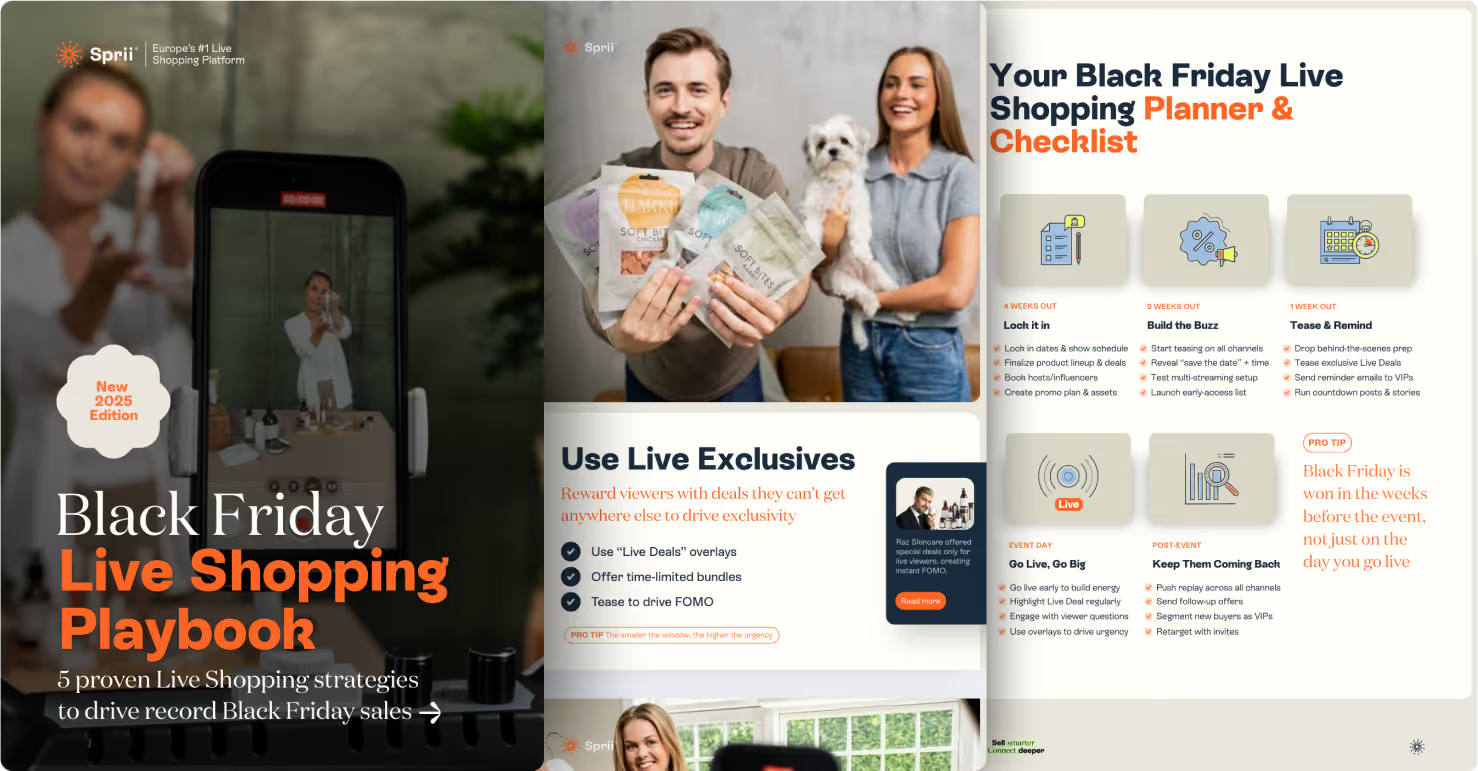
Win the retail rush with this playbook packed with Live Shopping strategies
.webp)
Learn how they compareand discover the 12 key industry benchmarks.
.webp)
BLACK FRIDAY WEBINAR
Learn how leading retailers leverage Live Shopping on Black Friday

See how a Sprii-powered Live Shopping event works on FB, IG and your website
BLACK FRIDAY WEBINAR
Learn about 5 Live Shopping strategies to dominate Black Friday

Master Live Shopping—from audience targeting to driving sales.
5 proven plays to win Black Friday and Black Month with Live Shopping
in under 5 minutes

in under 5 minutes
See How Sprii Works
%201.avif)
See How Sprii Works
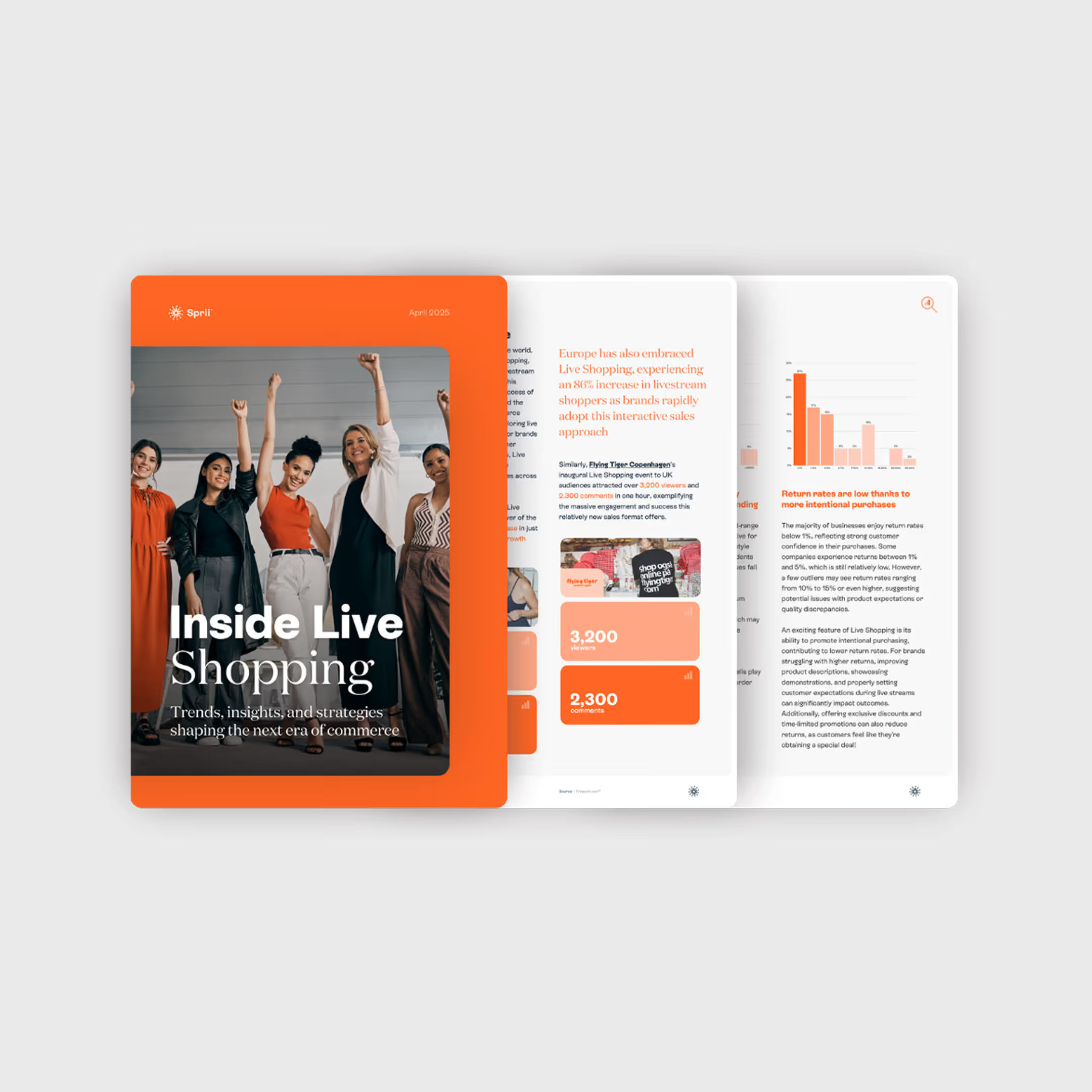
Inside Live Shopping
%201.avif)
Inside Live Shopping