Comment selling - a way to sell quickly and efficiently
Comment selling is the new way of selling on social media and your website. With comment selling you can increase reach and generate revenue directly from your social media channels.


- Turn social engagement directly into sales: Comment Selling allows customers to buy products instantly by commenting on posts, videos, or live streams — creating a faster, frictionless shopping experience directly inside social media.
- Boost reach and conversions through social algorithms: High comment activity increases engagement signals on platforms like Facebook and Instagram, helping brands gain more organic visibility while creating powerful social proof that drives additional purchases.
- Scale scocial commerce with atuomation: Automated checkout links, inventory syncing, direct message flows, and multi-platform integrations make it possible to run high-volume Comment Selling campaigns efficiently across Facebook, Instagram, and Live Shopping events.
Comment selling is transforming social media
Comment selling or post selling is quickly becoming one of the most powerful trends in social commerce — transforming social media from a marketing channel into a direct sales channel.
Instead of sending shoppers away to a traditional webshop, brands can now turn engagement into instant purchases directly from social posts, videos, and comments with comment-to-buy functionality.
Fashion, beauty, electronics, home goods, and lifestyle brands are all increasingly using comment selling to create faster, more interactive shopping experiences that feel native to the platforms consumers already use every day.
But what exactly is comment selling?
In simple terms, comment selling allows customers to purchase products by commenting on a social media post or video using a keyword, product number, or trigger word. Once the comment is made, automated technology guides the shopper through the checkout process — creating a seamless buying journey without disrupting the browsing experience.
The result is a shopping experience that feels more engaging, more social, and far more immediate than traditional e-commerce.
What comment selling is and how it works
At its core, comment selling allows customers to claim or purchase a product by commenting a keyword, product number, or trigger word — often something as simple as "Sold" or a product code — on a social media post, Reel, Story, or live stream. Turning, for example, reels into shoppable video clips. From there, automation takes over.
The typical flow looks like this:
- A brand publishes a product post
- A viewer comments to signal purchase intent
- The automation platform detects the comment in real time
- The customer instantly receives a direct message with a checkout link, by a direct message automation
- The purchase is completed by the customer clicking on the link and finishing the payment directly from that social interaction
This process works equally well on static posts, videos and during live shopping events. For the customer, it removes the need to navigate away from their feed, search for a product, and work through a multi-step checkout. They see something they want, they comment, and a purchase link arrives in seconds. The process also allows for steps like picking the right product variants, cart expiration timers and and dynamic product selection.
There is also a social proof effect built into the format. When an audience watches comments fill up with "Sold" responses, it creates visible demand. That real-time activity signals popularity, builds confidence, and often encourages others to act before the item is gone - and the engagement on the post also pleases the algoritm.
Why comment selling drives more sales
The commercial case for comment selling comes down to one thing: it removes the gaps between interest and action. Traditional e-commerce asks customers to search for a product, then click on a link, land on a product page, add to cart, and complete checkout — every step is a potential exit point. Comment selling collapses that journey into a single interaction.
Urgency plays a significant role too. Limited stock, live countdowns, and the visible activity of other shoppers create a buying environment where hesitation is costly. That sense of real-time competition is difficult to replicate with a static product page.
From an engagement standpoint, high comment volumes signal relevance to social algorithms, which can increase a post's organic reach without additional ad spend. Brands running comment selling campaigns often see stronger overall performance from their social content as a result.
There is also a quality dimension to the conversions. Shoppers who engage through comment selling — especially during live events — have already seen the product in context, asked questions, and made a more considered decision. Sprii data shows return rates as low as 10–15% for live and comment selling, compared to the 20–30% typical of traditional e-commerce. More engaged buyers simply return less.
For businesses of any size, from independent boutiques to established retailers, comment selling offers a practical way to monetise existing social audiences without rebuilding their entire commerce infrastructure.
Comment Selling: The Algorithm’s Best Friend
One of the biggest reasons comment selling has exploded in popularity is that it works exceptionally well with social media algorithms.
Platforms like Facebook and Instagram are designed to reward content that creates interaction. The more people comment, react, share, and engage with a post, the more likely the platform is to push that content to additional users organically. Comment selling naturally encourages exactly this type of behaviour.
Instead of passive scrolling, users actively participate by commenting to claim products, ask questions, react to limited offers, or join conversations happening in real time. Every interaction sends a positive engagement signal to the algorithm, helping the post reach larger audiences without additional advertising spend.
This creates a powerful momentum effect. More comments lead to greater visibility, greater visibility drives more engagement, and more engagement often results in even more sales. At the same time, visible customer activity acts as social proof, encouraging new viewers to join the conversation and purchase themselves.
Compared to traditional promotional posts that simply push users toward an external webshop, comment selling keeps audiences interacting directly on the platform — something social media algorithms strongly favour. The result is content that not only converts better but also continues reaching new potential customers long after the original post is published.
Sell simultaneously across Facebook and Instagram
Running comment selling on a single platform is valuable — but managing it across multiple social channels from one place is where brands can truly scale.
With a platform like Sprii, brands can run comment selling campaigns across Facebook and Instagram simultaneously while managing all customer interactions from one unified dashboard. Instead of switching between apps, tracking comments manually, or risking missed purchase requests, waitlist management every customer interaction is captured and handled in real time from a single workflow.
This makes it significantly easier to scale comment selling operations without increasing manual workload for your team as the platform as inventory management sync with most e-commerce platforms. Whether customers comment on Facebook or Instagram, the buying experience remains seamless and consistent.
Beyond the comments themselves, integrations with platforms like Shopify integration, WooCommerce, and Magento ensure that inventory, orders, and customer data stay automatically synced as products sell. Automated direct message campaigns and promotional flows also make it possible to re-engage previous shoppers, recover abandoned carts, and keep customers returning between campaigns.
For growing brands, the ability to manage comment selling across multiple channels — while keeping operations streamlined behind the scenes — creates a major competitive advantage. It allows brands to increase reach, simplify operations, and deliver a more consistent customer experience without adding operational complexity.
Manage stock and fulfil orders from one place
Comment selling at scale requires tight inventory control to avoid overselling or disappointing customers. Sprii's platform enforces maximum quantity limits per customer, auto-closes comment selling when stock hits zero, has automated invoicing and waitlist mangement. Real-time inventory counts are visible to the host during a live show and quanity can be added to post and videos for comment selling, enabling on-the-spot decisions about which products to feature next.
Order management is unified: invoices are generated automatically, and the platform integrates with third-party shipping providers such as Shipmondo, so merchants can configure their own shipping methods, costs, and free-shipping thresholds. For Shopify, WooCommerce, and Magento users, inventory syncs automatically — meaning stock sold via comment selling is immediately deducted from the main store or webshop, preventing double-selling. Waitlist and auto-checkout features further reduce fulfilment friction when restocked items become available.
Automation features that do the heavy lifting
Scaling comment and post selling without automation is not realistic. When dozens or hundreds of customers comment simultaneously on a post or live stream, manually responding to each one, sending checkout links, tracking inventory, and following up on incomplete orders is simply not feasible. Automation is what makes the model work at any meaningful volume.
A platform built for comment selling handles the entire customer interaction flow automatically. When a comment is detected, the system sends a personalised direct message with a checkout link — without any manual input from the brand. If the customer does not complete the purchase, cart recovery reminders go out automatically. Invoices are generated and delivered.
Beyond the transaction itself, automation supports ongoing customer relationships. Brands can set up direct message campaigns, Instagram and facebook messenger automation, to notify followers about upcoming events, new product drops, or restocked items. These flows keep the audience engaged between live shows and posts and drive repeat purchase behaviour without requiring additional manual effort from the team.
Integration with e-commerce platforms is equally important here. When comment selling data flows automatically into Shopify, WooCommerce, or Magento, brands get a complete picture of their sales performance across channels. There is no manual reconciliation, no risk of inventory errors, and no operational bottleneck slowing down fulfilment. The result is a comment selling operation that can grow without growing the workload proportionally — which is exactly what scaling efficiently looks like in practice.
Supercharge Live Shopping with comment selling
Comment selling works well on its own. Combined with Live Shopping, it becomes genuinely powerful.
Live video gives hosts the ability to demonstrate products in real time, answer questions from the audience, react to comments, and create the kind of spontaneous energy that static content simply cannot replicate. When viewers can comment during a broadcast to instantly claim products — and receive a checkout link within seconds — the gap between entertainment and purchase disappears entirely. You can learn more about mastering live selling techniques and how top brands are structuring their broadcasts for maximum impact.
The combination drives higher engagement and conversion rates for a few reasons. Urgency is amplified when a host announces limited stock and the audience can see comments piling up. Trust is built faster when customers watch a real demonstration rather than reading a product description. And the social atmosphere of a live event — the chat, the reactions, the shared experience — creates an emotional connection that a product page can never emulate.
For brands exploring strategies for increasing live sales, comment selling during a broadcast is one of the highest-leverage tools available. It turns viewers into buyers without interrupting the flow of the show, and it gives hosts real-time feedback on which products are resonating most. Platforms like Sprii manage all of this automatically — comment detection, direct message delivery, inventory updates, and order management — while multi-channel streaming across social media and the website simultaneously.
If you want to understand effective live selling practices in more depth, or explore what selling through interactive livestreams looks like in practice, the combination of live video and comment selling is the clearest path from social audience to measurable revenue.
The right live stream selling software, like Sprii, handles the operational complexity so your team can focus on the show itself.
Why brands choose Sprii for Comment Selling
As one of Europe’s leading Live Shopping and video commerce platforms, Sprii helps brands turn engagement across social media into measurable sales through interactive shopping experiences — including powerful Comment Selling functionality.
With Comment Selling, brands can automatically send product links, discount codes, checkout flows, or direct messages when viewers comment during a Live Shopping event, video, or social post. This creates a faster and more seamless path from engagement to purchase, while also boosting interaction and visibility on social platforms.
Sprii’s platform is designed to support brands at different stages of their social commerce journey. Whether businesses are getting started with Comment Selling or running large-scale Live Shopping campaigns across multiple markets, Sprii offers flexible solutions built around growth, automation, and performance.
The platform combines Comment Selling & post selling with a full suite of social commerce tools, including:
- Multi-channel Live Shopping streaming
- Shoppable video experiences for websites and social media
- Automated engagement and moderation tools
- Facebook and Instagram integrations
- Performance analytics and sales tracking
- Evergreen shoppable video replays
- E-commerce platform integrations
For brands looking to scale beyond basic social selling, Sprii also offers more advanced capabilities such as customized onboarding, strategic support, campaign optimization, and enterprise-level integrations.
Today, more than 2,700 brands trust Sprii to power engaging shopping experiences that drive both community engagement and revenue — helping brands transform comments, conversations, and live interactions into real sales.
Frequently asked questions about comment selling
What is comment selling and how does it work?
Comment selling is a social commerce method where customers purchase products by commenting a keyword — typically "Sold" or "buy X" — on a Facebook or Instagram post or live video. When a customer comments, an automated platform like Sprii instantly sends them a direct message with a purchase link, guiding them through checkout without leaving the social platform.
The seller posts an offer (text, image, or video), and the audience comments to reserve, and the software handles confirmation, invoicing, and inventory updates automatically.
How do I get paid with comment selling?
Payment is processed through the checkout link sent automatically to the customer via direct message after they comment. Platforms like Sprii integrate with major payment providers and e-commerce platforms including Shopify, WooCommerce, and Magento, so funds flow directly into your existing payment setup.
Invoices are generated and sent automatically via email, Messenger, or comment reply, and cart recovery reminders help ensure customers complete payment.
What types of products work best with comment selling?
Comment selling works particularly well for products that benefit from visual demonstration and create a sense of urgency or scarcity.
Fashion, health and beauty, home décor, baby and kids products, hobbies, food and beverage, and electronics are all strong categories. The method suits any product that can be showcased in a video or image — and where limited stock or time-sensitive offers can drive competitive buying behaviour among viewers.
How does comment selling differ from a regular social media post?
A standard social media post with a product link requires the customer to click away, navigate a website, and complete a multi-step checkout — creating multiple points of drop-off.
Comment selling removes that friction entirely: the customer comments to claim the item and receives a direct purchase link instantly. This keeps the transaction within the social platform, leverages the entertainment and community of live or post selling, and generates visible social proof (other users seeing "Sold" comments) that encourages further purchases.
Can comment selling work on both Facebook and Instagram at the same time?
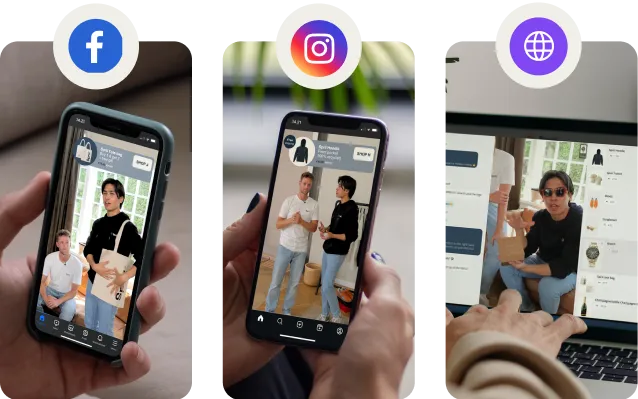
Yes — with a platform like Sprii, you can run comment selling simultaneously across Facebook pages, Facebook groups, Instagram, and your own website from a single broadcast.
All comments from every channel are aggregated into one dashboard in real time, so you never miss a purchase intent regardless of where the customer is watching. This multi-channel approach maximises your audience reach without requiring any additional manual effort from your team.
How does comment selling handle inventory and prevent overselling?
Automated comment selling platforms can enforce maximum quantity limits per customer and automatically close the comment selling campaign when stock reaches zero.
Real-time inventory counts are displayed to the host during live shows, and the system syncs with e-commerce platforms like Shopify and WooCommerce — so any item sold via comment is immediately deducted from your main store inventory. Customers who miss out can be added to a waitlist and notified, or automatically checked out, when stock is replenished.
Does comment selling reduce product return rates?
Yes — comment selling, especially when combined with live shopping, significantly reduces return rates. Sprii reports return rates of 10–15% for live and comment selling, compared to the industry standard of 20–30% for traditional e-commerce.
When customers watch a live demonstration, see the product's fit, texture, and details in real time, and interact with the host before buying, they make more informed purchase decisions and are less likely to return the item. Showing the product in action also helps with conversion rate optimization.
Use our Live Shopping calculator to see how much you could earn.

you could possibly earn
you could possibly earn
Unleash the power of Live Shopping with Sprii's 5-part bootcamp series!
%201.webp)
Win the retail rush with this playbook packed with Live Shopping strategies
.webp)
Learn how they compareand discover the 12 key industry benchmarks.
.webp)
BLACK FRIDAY WEBINAR
Learn how leading retailers leverage Live Shopping on Black Friday

See how a Sprii-powered Live Shopping event works on FB, IG and your website
BLACK FRIDAY WEBINAR
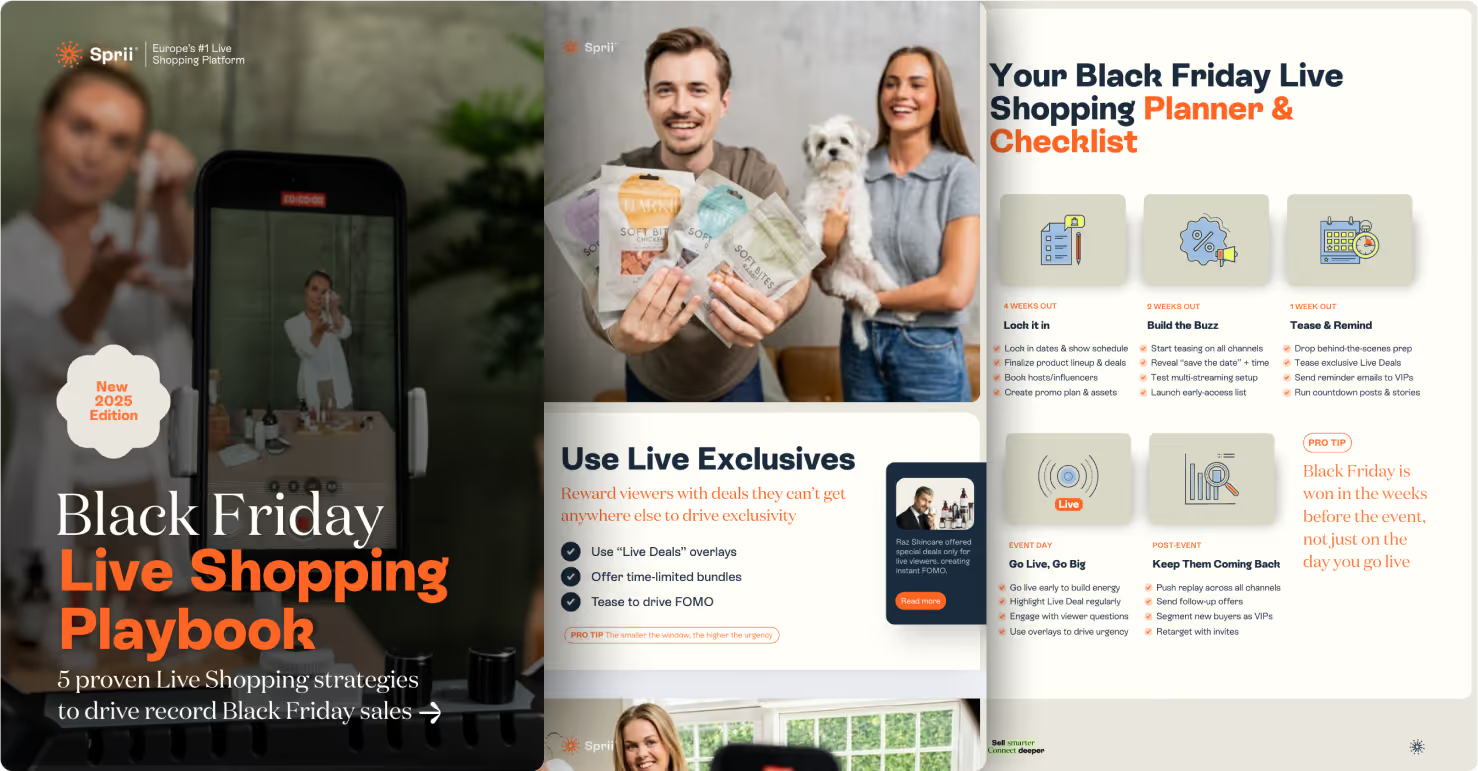
Learn about 5 Live Shopping strategies to dominate Black Friday

Master Live Shopping—from audience targeting to driving sales.

5 proven plays to win Black Friday and Black Month with Live Shopping
in under 5 minutes
in under 5 minutes
See How Sprii Works
%201.avif)
See How Sprii Works
Inside Live Shopping
%201.avif)
Inside Live Shopping
.avif)