Live commerce explained – What it is and how it works
Video has become one of the most influential parts of the online shopping journey. Customers no longer want to rely on static product images — they expect product demonstrations, recommendations, and the opportunity to interact before making a purchase and with Gen Z the leading the way, the demands are higher than ever before and brand loyalty lower than ever.

.webp)
Quick Summary
That's exactly where live commerce comes in. By combining live video, real-time conversation, and instant purchasing, retailers can turn engagement into measurable sales.
Whether you're exploring live commerce for the first time or looking to improve your existing strategy, this guide covers everything you need to know — from how it works and why it converts to best practices, proven formats, and how leading brands use platforms like Sprii to make live commerce a consistent revenue channel.
What is live commerce and how does it work?
Online shopping has evolved beyond static product pages. Today's customers want to see products in action, ask questions, and feel confident before they buy. That's exactly what live commerce offers.
So, what is live commerce? It combines live video with ecommerce, allowing brands to demonstrate products, interact with viewers in real time, and sell directly during a broadcast. Instead of moving customers between social media, product pages, and checkout, the entire buying journey happens in one place. Viewers can watch product demonstrations, join a live Q&A, and purchase products without leaving the stream making the entire sales funnel take place in the moment.
Often referred to as live shopping, live selling, or live streaming commerce, the format creates a more engaging and interactive customer experience than traditional ecommerce. The ability to ask questions, receive immediate answers, and see products used in real-life situations builds trust while helping customers make faster, more informed purchasing decisions.
Although the format gained global attention through the China market, live commerce has quickly become an important sales channel for retailers worldwide. Modern live commerce platforms make it easy to broadcast across multiple channels from a single event.
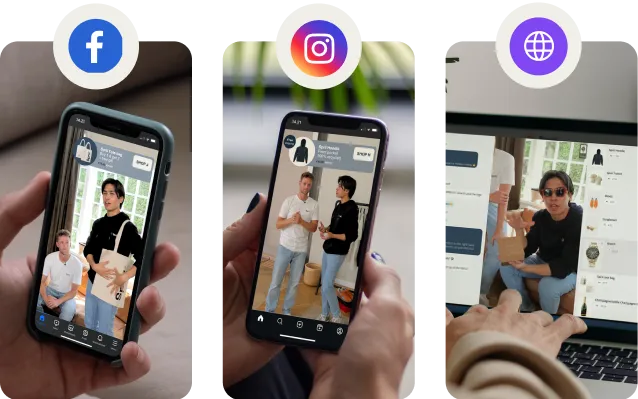
With Sprii, brands can stream simultaneously to Facebook, Instagram, and their own website while managing products, comments, and orders from one platform. By combining real-time interaction with seamless shopping, live commerce helps retailers increase customer engagement, strengthen brand awareness, and turn live video into measurable revenue.
Why live commerce drives higher conversions
One of the biggest reasons brands invest in live commerce and live social shoppingis its ability to turn engagement into sales. Unlike traditional ecommerce, where customers browse product pages alone, live shopping creates an interactive experience that helps shoppers make purchasing decisions in real time.
Watching a product being demonstrated by a knowledgeable host answers many of the questions that typically prevent a sale. Customers can ask about sizing, materials, colours, or features, receive immediate answers through live Q&A, and see products used in real-life situations instead of relying on static images. This combination of product demonstrations and real-time interaction builds trust and shortens the path to purchase.
The format also creates a natural sense of urgency. Limited-time offers, exclusive products, and countdown deals encourage viewers to act while they're engaged, increasing both conversion rate and average order value. Rather than interrupting the shopping journey, customers can discover a product, learn about it, and buy it in one seamless experience.
For many retailers, the results speak for themselves. While traditional ecommerce often converts around 2–3% of website visitors, brands using live commerce regularly achieve significantly higher conversion rates.
Sprii, a live commerce software, customers have seen conversions increase by up to 20× compared to their standard online store performance, particular due to impulse purchases and better informed descision making. Combined with stronger customer engagement and lower return rates, live commerce isn't simply another marketing channel—it's a more effective way to sell online.

Turn viewers into active shoppers
One of the biggest advantages of live commerce is that it transforms shopping from a passive experience into an interactive one. Instead of scrolling through product pages alone, customers become part of the conversation. They ask questions, react to demonstrations, vote in polls, and engage directly with the host throughout the broadcast.
This level of real-time interaction builds trust in a way that traditional ecommerce simply can't. A customer wondering how a dress fits, whether a gadget is compatible, or how a skincare product looks on different skin tones can get an answer immediately. These authentic conversations remove uncertainty and help shoppers feel confident enough to purchase.
Consistency also plays an important role. Brands that host regular live shopping events often build loyal communities that return week after week. Over time, these broadcasts become more than sales events—they become opportunities to educate customers, share tutorials, introduce new products, and strengthen brand loyalty. Many retailers also collaborate with creators through influencer marketing, giving audiences a familiar face they already trust.
With Sprii, hosts can manage comments, highlight products, and respond to questions from Facebook, Instagram, and their own website in one place. That makes it easier to keep the conversation flowing while delivering a seamless shopping experience. The result is a live business, who drive stronger customer engagement, higher confidence at the point of purchase, and a community that's far more likely to return for the next live event.
Show products in action with real storytelling
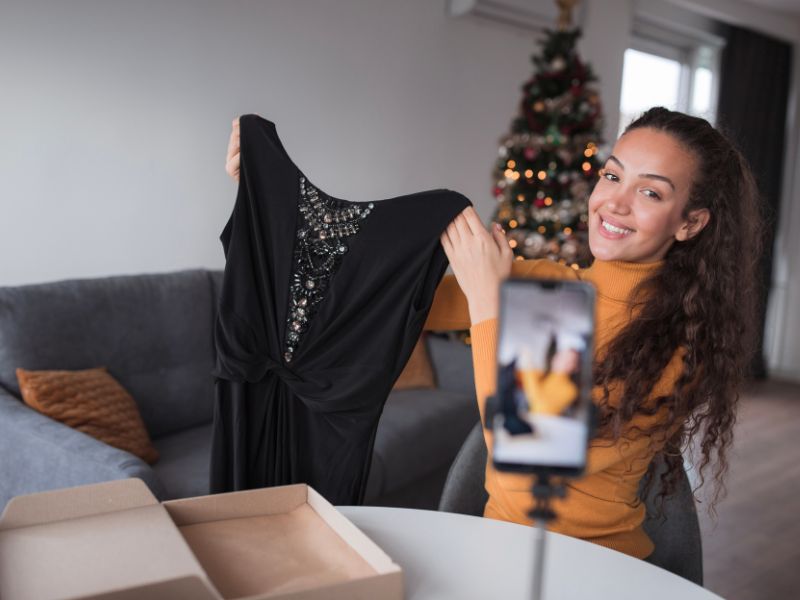
One of the biggest advantages of live commerce is that customers don't have to imagine what a product looks like — they can see it for themselves. Whether it's a fashion brand showing how a jacket fits on different body types, a beauty retailer running step-by-step tutorials, or an electronics store comparing features live on camera, product demonstrations remove much of the uncertainty that exists in traditional ecommerce.
Unlike polished advertisements, live broadcasts feel genuine. Hosts answer questions as they come in, react naturally, and adapt demonstrations based on what viewers want to see. That level of authenticity builds trust because customers know they're seeing the product in real time rather than a carefully edited marketing video.
Storytelling makes the experience even more engaging. Sharing the inspiration behind a collection, introducing the people who designed the product, or explaining how it's made helps brands create an emotional connection that extends beyond price. This is particularly important for Gen Z, who increasingly value transparency and authentic brand experiences over traditional advertising.
The most successful live shopping events follow a simple structure: introduce the product, demonstrate it from multiple angles, answer questions through a live Q&A, and finish with a clear reason to buy. Combined with interactive shopping features, this approach keeps viewers engaged for longer and gives them the confidence to make a purchase.
Why live commerce cuts return rates below 10%
One of the biggest challenges in ecommerce isn't making the sale — it's keeping it. High return rates are often caused by a gap between what customers expect and what they actually receive. Static images and product descriptions can only tell part of the story.
Live commerce helps close that gap. Through live product demonstrations and more personalized shopping, customers can see how products look, fit, feel, and perform before making a purchase. Whether it's showing the true colour of a garment, demonstrating the features of a kitchen appliance, or answering sizing questions during a live Q&A, shoppers receive the information they need to buy with confidence.
This added transparency creates a stronger sense of authenticity. Customers aren't watching heavily edited marketing videos—they're seeing real people use real products in real time. That level of trust leads to more informed purchasing decisions and fewer surprises when an order arrives.
For retailers, the impact of live streaming retail goes beyond happier customers. Lower return rates mean reduced shipping costs, improved profitability, and a more efficient operation overall. Many brands using live commerce report significantly fewer returns compared to traditional ecommerce, making live video not just a powerful sales channel but a smarter way to sell online.
By giving shoppers the confidence to buy the right product the first time, live commerce improves the customer experience while protecting margins—making it a win for both retailers and their customers.
Live commerce works across every industry
Although live commerce is often associated with fashion and beauty, the format works wherever customers benefit from seeing a product before they buy. If a product can be demonstrated, explained, or compared, it can usually be sold live.
The flexibility of live video ecommerce also makes it suitable for product launches, seasonal campaigns, exclusive collections, and educational content. Instead of focusing solely on selling, brands can use live broadcasts to entertain, educate, and build lasting relationships with their audience.
With Sprii, every live event can be streamed simultaneously to Facebook, Instagram, and your own website from a single broadcast. That means brands reach customers wherever they already spend their time while maintaining one consistent shopping experience across every channel.
Choosing the right live commerce platform
Not all live commerce platforms are built the same. Some focus exclusively on streaming, while others are designed to support the entire live social shopping journey—from product discovery to checkout.
When comparing live commerce software, look beyond video quality. The best platforms combine social media integration, product management, inventory synchronisation, and e-commerce integration into one solution. This removes manual work for your team and creates a smoother experience for customers.
A modern live streaming e commerce platform should also make it easy to reach shoppers wherever they are. Instead of running separate broadcasts, Sprii makes live streaming retail easy buy lettingbrands stream to Facebook, Instagram, and their own website simultaneously while managing comments, products, and orders from one dashboard.
The easier your technology is to use, the easier it becomes to make live commerce a regular part of your sales strategy—not just a one-off campaign.
Getting started with live commerce
Launching your first live commerce event is simpler than many retailers expect. You don't need a professional studio or expensive production equipment to create an engaging shopping experience.
What you in theory need to get started is:
- A good camera
- Clear audio
- Reliable lighting
- Stable internet connection
Success depends less on production quality and more on preparation.
Choose products that benefit from demonstrations, plan a clear running order, and think about the questions customers are most likely to ask. Building moments for interaction — whether through a live Q&A, exclusive offers, or audience polls—helps keep viewers engaged throughout the broadcast.
Promoting your event is just as important as hosting it. Share the date across email, social media, and your website well in advance to build anticipation and encourage reminder sign-ups. The more viewers you have from the start, the more engaging the experience becomes for everyone watching.
Many retailers discover that their first event is only the beginning. With every broadcast, hosts become more confident, audiences grow, and the content becomes another valuable asset that can be repurposed into clips, shoppable video, and social content long after the live event ends.
Why brands choose Sprii for live commerce
Running a successful live commerce strategy requires more than a streaming tool. It requires a platform that connects content, commerce, and customer engagement into one seamless experience.
Sprii helps brands turn every broadcast into a fully shoppable event by combining multistreaming, product management, and interactive shopping in one platform. A single live show can be broadcast to Facebook, Instagram, and your own website simultaneously, while products, inventory, comments, and orders stay synchronised behind the scenes.
Beyond the technology, Sprii works closely with retailers to develop a repeatable strategy for live shopping. From planning and production to analysing performance, brands receive the support they need to make live commerce a consistent revenue channel rather than an occasional marketing campaign.
Trusted by more than 3,000 brands across Europe, Sprii has helped retailers generate hundreds of millions in revenue through live video. Whether you're hosting your first broadcast or scaling an established programme, the platform is designed to make live commerce simple, measurable, and built for long-term growth.
Frequently asked questions
What is the meaning of live commerce?
Live commerce — also called live shopping or live stream shopping — is a sales format that combines real-time video broadcasting with integrated e-commerce functionality. A host presents products live while viewers watch, ask questions via chat, and purchase directly from the same screen without being redirected to a separate page. The format compresses the entire shopping funnel (awareness, consideration, and conversion) into a single interactive session, making it one of the most efficient sales channels available to online retailers today.
What is Live Shopping and what is Live Selling?
Live shopping and live selling are often used interchangeably with live commerce. All three describe a shopping experience where brands showcase products through live video while customers watch, ask questions, and purchase in real time. The main difference is that live commerce refers to the overall strategy and technology, while live shopping and live selling focus on the live sales event itself. Regardless of the name, the goal is the same: to create a more engaging, interactive shopping experience that builds trust and drives higher conversions. But what is it that makes live commerce so effective? Let's take a closer look at why it consistently outperforms traditional ecommerce.
What is the best live selling platform?
The best platform depends on your goals. Social platforms like Facebook, Instagram, and TikTok offer built-in audiences but limit your control over data and checkout. Hosting live events on your own website gives you full ownership of the customer experience and first-party data. Purpose-built live shopping software like Sprii combines both: you broadcast simultaneously to Facebook, Instagram, and your own website from a single stream, while keeping inventory, orders, and shipping fully automated through native integrations with Shopify, WooCommerce, and other e-commerce platforms. Sprii has been recognised as the Best E-commerce Tool at the 2023 Danish E-commerce Awards and is trusted by more than 3,000 brands across Europe.
What are the benefits of live commerce?
Live commerce delivers measurable benefits across several dimensions. Conversion rates reach 10–30% compared with 2–3% for standard e-commerce. Return rates drop to below 10% because viewers see products demonstrated in real time and get their questions answered before buying. Average order value increases as hosts naturally introduce complementary products mid-stream. Brands also build stronger customer loyalty through consistent, interactive events that create a community of repeat buyers. Live sessions generate real-time data on customer preferences and objections that can inform product development and marketing strategy.
How does live commerce reduce product returns?
Returns in traditional e-commerce are largely driven by the gap between a customer's expectation — based on static images and written descriptions — and the reality of the product. Live commerce closes that gap: viewers see true colours and textures, watch the product being used, hear how it fits or functions, and can ask specific questions before committing to a purchase. This informed buying process means customers are far less likely to experience post-purchase regret. Sprii customers consistently see return rates fall to below 10%, compared with industry averages of 20–30% for fashion and beauty.
Do I need professional equipment to start live commerce?
No. The barrier to entry is lower than most brands expect. The essentials are a smartphone or webcam, a quality microphone, a basic lighting setup (even a ring light makes a significant difference), and a stable internet connection of at least 10 Mbps upload speed. Professional studio production can enhance the experience, but many successful live events are run with minimal equipment. What matters most is a knowledgeable, engaging host and a well-prepared product selection. Sprii provides show production assistance and strategy sessions to help brands get broadcast-ready quickly, regardless of their starting point.
How far in advance should I promote a live shopping event?
Scheduling and promoting your event at least two to three weeks in advance gives you enough runway to build anticipation across email, social media, and on-site placements. Staggered announcements work well: start with a save-the-date post, follow up with behind-the-scenes product teasers, and send a reminder email 24 hours before going live. Offering an early-bird incentive or a stream-exclusive discount in your promotional content gives potential viewers a concrete reason to tune in rather than watch the replay.
Is live commerce only suitable for fashion and beauty brands?
Not at all. While fashion and beauty were early adopters, live commerce has proven effective across a wide range of categories. Sprii works with brands in fashion, health and beauty, home and decor, hobbies and interests, baby and kids, electronics, pet care, and food and beverage. Any product that benefits from demonstration, explanation, or storytelling is a strong candidate. Food brands run live recipe sessions, electronics brands walk through feature comparisons, and home goods brands style rooms in real time. Seeing a product in action — with a knowledgeable host answering questions live — builds the confidence that converts browsers into buyers.
Use our Live Shopping calculator to see how much you could earn.

you could possibly earn
you could possibly earn
Unleash the power of Live Shopping with Sprii's 5-part bootcamp series!
%201.webp)
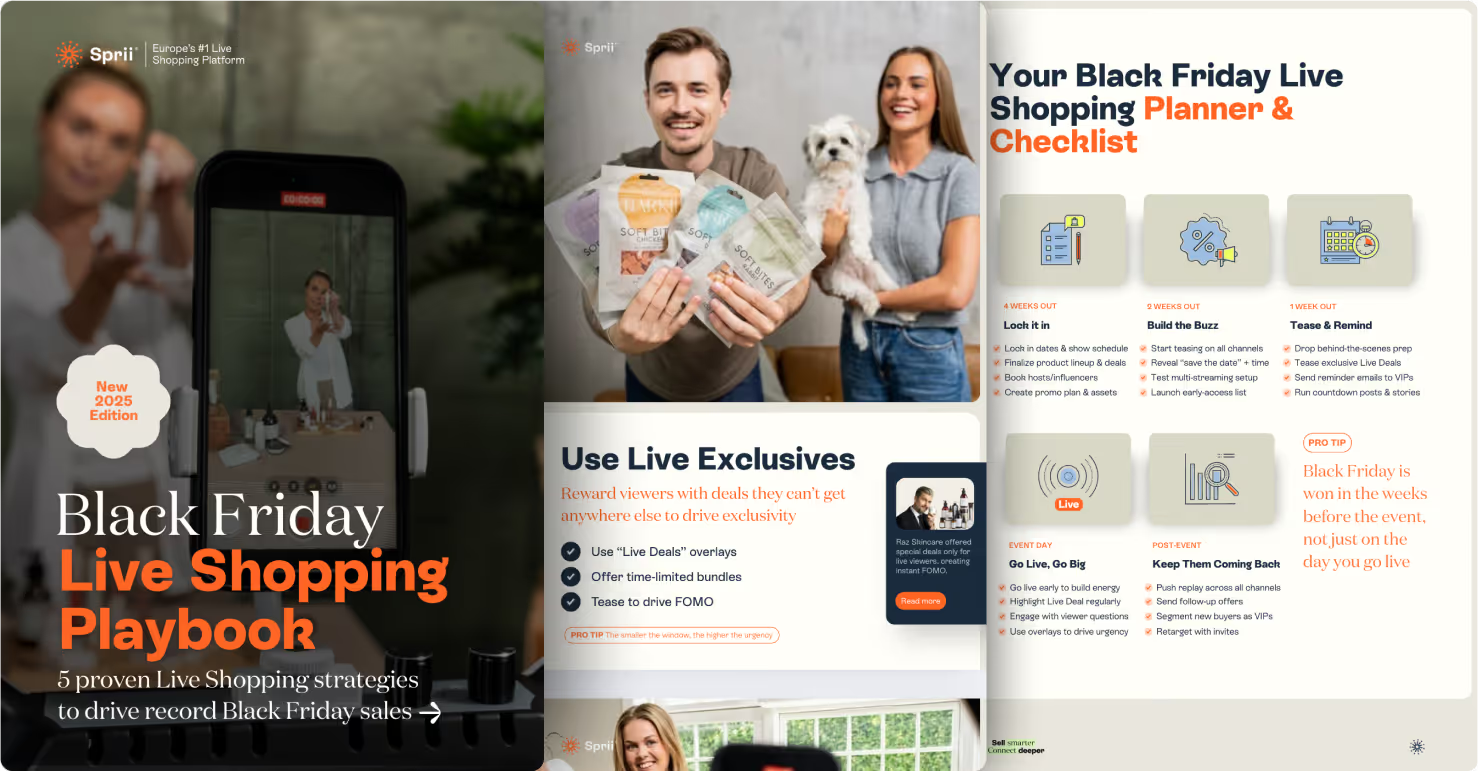
Win the retail rush with this playbook packed with Live Shopping strategies
.webp)
Learn how they compareand discover the 12 key industry benchmarks.
.webp)
BLACK FRIDAY WEBINAR
Learn how leading retailers leverage Live Shopping on Black Friday

See how a Sprii-powered Live Shopping event works on FB, IG and your website
BLACK FRIDAY WEBINAR
Learn about 5 Live Shopping strategies to dominate Black Friday

Master Live Shopping—from audience targeting to driving sales.

5 proven plays to win Black Friday and Black Month with Live Shopping
in under 5 minutes

in under 5 minutes
See How Sprii Works
%201.avif)
See How Sprii Works
Inside Live Shopping
%201.avif)
Inside Live Shopping