What is a Shoppable Video? Examples, Types & Best Practices
Every online retailer faces the same challenge: turning attention into sales. Shoppable video bridges that gap by combining engaging video content with instant purchasing, allowing customers to discover, explore and buy products without leaving the viewing experience.


- Shoppable video removes friction by letting customers discover and buy products without leaving the video
- Brands using shoppable video typically see higher conversions, stronger engagement, and fewer product returns because shoppers can see products in action before buying.
- The most effective strategy combines multiple formats—including Live Shopping, social videos, website videos, comment selling, and shoppable replays—to reach customers throughout the buying journey.
- Success depends as much on execution as technology. Mobile-first content, authentic demonstrations, audience interaction, and consistent publishing outperform expensive production.
- The best shoppable video platforms integrate seamlessly with your ecommerce stack, making it easy to sync products, measure performance, and scale video into a long-term revenue channel.
Whether you're exploring what shoppable video is, comparing different formats, or looking for the right shoppable video platform, this guide covers everything you need to know. You'll learn how shoppable video works, why it consistently outperforms traditional ecommerce experiences, the five formats every retailer should know, and how to create a strategy that drives measurable results.
What shoppable video actually is and how it works
A shoppable video is a video that lets viewers buy products directly from within the viewing experience, without navigating away to a separate page. That single distinction is what separates it from a standard product video or brand film.
Traditional video sends people on a detour. A viewer watches, feels interested, then has to remember the product name, open a new tab, search, find the right page, and hope the momentum survives the journey. Shoppable video removes that detour entirely.
Think of it like a shop window you can walk straight into. You see something you want, tap it, and you are already at the point of purchase — no hunting required.
How the buying journey works
Products inside a shoppable video are made interactive through several methods: clickable hotspots that appear over the product on screen, product tags or cards that surface details and pricing, clickable overlays with an add-to-cart button, or comment-to-buy mechanics where a viewer types a keyword in the comments to trigger a purchase flow.
The exact method depends on the platform and format, but the principle is the same — the customer journey from watching to buying happens in one continuous session.

Shoppable videos can be live or pre-recorded. Live shopping events let brands present products in real time while viewers ask questions and buy instantly. Pre-recorded interactive videos work as always-on content that keeps converting after the initial shoot.
Both formats appear across a wide range of surfaces: ecommerce websites, product detail pages (PDP), landing pages, Facebook, Instagram, TikTok, YouTube, and even email campaigns.
Brands are adopting in video shopping because it removes the multi-page path that causes most drop-off. Fewer steps between interest and checkout means fewer opportunities for a customer to change their mind. And with the younger generation where 67% of Gen-Z says they use Instagram for search and product discovery, shoppable videos is becoming increasingly important.
Why shoppable video benefits businesses
Shoppable video addresses two problems that have frustrated ecommerce for years: shoppers who are uncertain about a product, and the friction that sits between the moment of inspiration and the act of purchase.
Solve both at once and conversion improves almost automatically.
Higher conversion rates
Interactive video gives shoppers the context they need to buy with confidence. They can see how a garment moves, how large a product actually is, or how a tool works in practice, information that a static image simply cannot convey. Reducing the number of steps between discovery and checkout compounds the effect.
Research finds that shoppers watching shoppable convert 20% more than visitors browsing static product pages.
Lower return rates
Returns are expensive, and most of them happen because the product did not match expectations. When a customer sees fit, size, movement, materials, and functionality demonstrated before they buy, expectations become accurate.
Platforms including Sprii report average return rates below 10% for brands, boutiques and companies using live shopping and in video shopping, compared to ecommerce averages often cited in the 20–30% range. That gap represents real savings in fulfilment costs and real improvement in net revenue per order — though individual results will vary by category and execution.
Better customer engagement
Interactive video keeps people watching longer and participating more actively, thereby increasing your engagement rate. Viewers ask questions, respond to demonstrations, and interact with products in ways that passive browsing never triggers.
Live formats in particular build community through real-time conversation, regular viewers start to feel like regulars, and that loyalty translates into repeat purchases and higher lifetime value.
Better shopping experiences
Shoppers increasingly expect digital commerce to feel as immediate and engaging as social media. Shoppable video meets that expectation by blending entertainment, education, and convenience in a single experience.
It is shopping that feels like watching rather than shopping that feels like filling out a form.
Richer customer insights
Every interaction inside a shoppable video generates first-party data: which products were clicked, how long viewers watched, where drop-off happened, what drove add-to-cart events, and what converted.
This behavioural data is far more actionable than page-view counts alone, and it feeds directly into smarter product decisions, better content planning, and more targeted marketing. Industries where visual demonstration is critical tend to see the strongest results.
5 shoppable video formats worth knowing
Shoppable commerce is not a single format. Different formats serve different goals, audiences, and stages of the customer journey, and the strongest strategies use more than one.
Here's some shoppable video examples that you can integrate in your social media strategy or overall campaign strategy.
%20(2).png)
1. Live Shopping
Live shopping combines livestreaming with ecommerce in real time. A host presents products, answers questions through chat, runs demonstrations, and creates urgency through limited-time offers or exclusive launches — while viewers purchase without leaving the stream.
It is the format best suited to product launches, community building, and high-engagement campaigns. Common channels include brand websites, Facebook, and Instagram.
2. Social posts with comment selling
Comment selling lets customers purchase by typing a keyword, product number, or trigger phrase in the comments of a social media post. It works on Facebook and Instagram posts and is particularly effective for product launches and promotional campaigns.
Because it drives comment volume, it also benefits from how social platform algorithms reward high-engagement content, giving the post greater organic reach in the process.
3. Social shoppable video
Brands publish short-form video directly on social platforms with integrated shopping functionality or product tagging. Instagram, Facebook, TikTok, and shoppable YouTube videos all support variations of this format.
The goal is to turn discovery into immediate purchase without requiring the viewer to leave the platform, keeping the path to purchase as short as possible.
This is often a very manual and time consuming.
4. Shoppable video on your website
Interactive videos embedded on product pages, category pages, landing pages, or homepages let visitors click products directly within the video and purchase without interrupting the viewing experience.
This format works well for product demos, tutorials, and Shop the look, and it gives ecommerce teams a way to make existing web traffic more productive without increasing ad spend.
With Sprii Shoppables, brands can add interactive, shoppable videos anywhere on their website in just a few clicks. Whether it's a product page, homepage, or campaign landing page, shoppers can discover products, interact with the video, and add items to their cart without leaving the viewing experience—creating a smoother path from inspiration to purchase.
Learn more about Sprii Shoppables from this video:
5. Shoppable replays
A live shopping event does not have to stop generating revenue when the broadcast ends. Recorded shows can remain fully interactive , products stay clickable or comment-to-buyable, viewers can still purchase, and the content becomes an evergreen sales asset.
As brands produce more live content, shoppable replays become an increasingly important part of the overall video commerce strategy, extending the return on investment (ROI) of every event produced.
Format comparison
Seamless integration with Shopify, WooCommerce, and beyond
The best shoppable video solutions extend what a brand already has rather than asking teams to rebuild their operations around a new tool. Integration quality determines whether the experience feels joined-up or cobbled together — for the customer and the operations team alike.
Ecommerce platform integration
A shoppable video platform needs to connect directly with the ecommerce platform it sits alongside. That means a Shopify integration, WooCommerce, Adobe Commerce, BigCommerce, Centra, Shopware, and Salesforce Commerce Cloud, among others.
Product information, pricing, inventory, and variants should stay synchronized automatically through product catalogue sync — particularly during live events, product launches, and time-sensitive campaigns where real-time inventory accuracy is non-negotiable.
Checkout experience
Customers should be able to complete purchases using the retailer's existing checkout wherever possible. Familiar payment methods, consistent branding, and accurate order management all reduce abandoned carts. A seamless checkout that does not redirect shoppers to an unfamiliar environment maintains the trust built during the video itself — and keeps reporting unified rather than fragmented across systems.
Product management
Ecommerce teams need to import products automatically, tag them inside videos, update details without developer involvement, and reuse product catalogs across multiple pieces of content. As video production volume grows, the ease of managing products across that library becomes as important as the video quality itself.
Analytics and attribution
Shoppable video should connect to analytics tools that measure views, engagement, clicks, add-to-cart events, purchases, and revenue generated per video.
Video analytics that tie outcomes back to specific content make it possible to optimize future campaigns based on evidence rather than instinct. Integrations with Klaviyo, HubSpot, Google Analytics, Meta Pixel, and Google Tag Manager extend this further — helping brands measure performance and personalize follow-up marketing based on real viewing behavior.
Logistics and order fulfilment
Orders placed through shoppable video should flow into the same fulfilment process as any other order — connecting to shipping providers, warehouse systems, and order management software without manual intervention. That continuity is what makes shoppable video feel like a natural extension of ecommerce operations rather than a separate channel that creates extra work.
What to look for in a shoppable video platform
- Works with your existing ecommerce platform
- Real-time product synchronization
- Uses your existing checkout for frictionless checkout
- Easy product tagging without developer support
- Strong video analytics and attribution
- Marketing tool integrations
- Video overlays with customization opportunity
- Mobile optimization for both viewers and hosts
- Scales with your content production volume
- Reliable onboarding and customer support
Platforms differ significantly in how well they cover these areas. Sprii, for example, integrates directly with Shopify and WooCommerce, supports connections with fulfilment providers, and includes marketing tool integrations — but the right checklist applies regardless of which platform a brand evaluates.
How to produce shoppable video content that performs
The best-performing shoppable content is built around a clear strategy, not expensive equipment. Whether the goal is a pre-recorded product video or a Live Shopping event, the underlying objective is the same: help customers understand the product well enough to buy it with confidence, and make the act of buying as frictionless as possible.
Creating high-converting shoppable videos
Hook viewers immediately. The first few seconds determine whether someone keeps watching. Lead with the product or the customer's problem — not a logo, a lengthy introduction, or a brand story. Attention on social media is short, and a slow opening loses the viewer before the product ever appears on screen. Make sure to have your call to actions clear.
Demonstrate, don't just describe. Showing a product in real-life use builds purchase confidence far more effectively than listing its features. Movement, fit, scale, texture, and before-and-after results all communicate things that words and static images cannot. Real people using the product in recognizable situations make the experience feel credible — and user-generated content (UGC) and influencer videos work particularly well here because they carry an authenticity that polished production sometimes loses. It also makes people more likely to add to cart because these questions are answered immediately.
Make shopping feel natural. Clickable hotspots and product cards should support the viewing experience, not interrupt it. Keeping interactive elements to roughly two to four products per video reduces visual clutter and keeps the viewer focused. Product placement should feel organic rather than forced.
Design for mobile first. The majority of social and ecommerce video is watched on a phone. Vertical framing, close-up shots, readable captions, and clear audio are not optional — they are the baseline. Short-form video in particular lives and dies by mobile optimization.
Repurpose every video. A single shoppable video can work across product pages, landing pages, Instagram, Facebook, TikTok, shoppable YouTube videos, email marketing, and paid advertising. Building with repurposing in mind from the start multiplies the value of every piece of content produced.
Hosting Live Shopping that drives sales
Plan your show — not every sentence. A flexible run-of-show covering product order, demonstrations, audience interaction moments, and promotions gives a host structure without making the broadcast feel scripted. Spontaneity is part of what makes live shopping engaging; a rigid script kills it and the storyline.
Make the audience part of the show. Live shopping works because viewers can participate — asking questions, responding to prompts, and having their comments acknowledged. Answering questions in real time, encouraging product interaction, and building genuine conversation are what separate a strong live event from a one-way broadcast. Storytelling plays a central role here: the host is not just presenting products, they are creating a narrative that viewers want to follow.
Create authentic urgency. Exclusive launches, limited stock, and live-only promotions create real reasons to buy now. The urgency should be genuine — manufactured scarcity that does not hold up damages trust and undermines the community a brand is trying to build.
Build consistency. Brands that go live on a regular schedule build audience habits. Returning viewers convert at higher rates than first-time viewers, and a consistent presence turns a channel into a community. Treating live shopping as a recurring show rather than a one-off campaign is what separates brands that scale the format from those that try it once.
Extend the value with shoppable replays. Every live event can become a shoppable replay, a product clip, social content, website video, and email content. The storytelling and product demonstrations that worked live continue working long after the broadcast ends — and that extended lifespan is where a significant portion of total revenue often comes from.
Checklist: creating shoppable content that performs
- Start with the product, not the brand
- Demonstrate instead of describe
- Keep shopping interactions simple and uncluttered
- Optimize every format for mobile by using vertical video
- Encourage real audience interaction
- Create urgency that feels genuine
- Repurpose every piece of content across channels
- Measure performance and keep testing
Strategy matters more than software, but Live Shopping platforms like Sprii offer dedicated onboarding, Live Shopping support, and shoppable replay functionality that help retailers put these practices into action without needing a production team to get started.
Metrics that actually measure shoppable video revenue
View counts tell you almost nothing useful about commerce performance. The metrics that matter start further down the funnel.
View-through rate (VTR) shows how much of a video viewers watch before dropping off — a strong signal of content quality and relevance.
Click-through rate (CTR) on product hotspots og products added to basket reveals how effective the tagging and content are at driving interest.
Add-to-cart rate from video sessions measures how many viewers move from watching to buying intent.
Conversion rate and revenue per viewer connect directly to the business case.
For paid placements, return on ad spend (ROAS) ties spend to outcome.
Return rate post-purchase rounds out the picture — Sprii merchants average below 10%, which is a meaningful performance indicator in its own right.
Beyond those core metrics, A/B testing different video formats, hotspot/overlay placements, and call-to-action copy surfaces what actually moves the needle for a specific audience and product category.
By focusing on these outcomes and KPI's, brands can stop guessing and start scaling video as a predictable revenue engine, and ensure ROI.
Choosing the right shoppable video platform for your store
Not all shoppable video platforms are built for the same use case. Evaluating them on the right criteria saves a significant amount of time and avoids costly migrations later.
%20(6).png)
Multistream capability. Going live on Facebook, Instagram, and your own website simultaneously through a single platform is far more efficient than managing separate tools for each channel. If a platform requires separate setups per channel, that overhead compounds quickly as show frequency increases.
Native ecommerce integration. Direct connections to Shopify, WooCommerce, or whichever platform a brand runs on should require no custom development. Product data, inventory, and variants need to sync automatically — not be maintained manually.
Automation. Order collection, shipping workflows, and inventory sync handled automatically are the difference between a channel that scales and one that creates proportionally more manual work as it grows.
On-demand shoppable video. Live recordings repurposed as always-on shoppable content — embedded on product pages, homepages, or landing pages through an embeddable player — extend the revenue life of every event produced. A platform that supports this turns one-time broadcasts into a persistent sales asset.
Support model. Onboarding handled by a real team, not just documentation, makes a meaningful difference in how quickly a brand can go live with confidence. The social commerce learning curve is real, and having experienced support shortens it considerably.
There is countless different live shopping platforms out there. You can take a look at our Live Shopping comparison guide here. Or listen to the 3,000+ brands across Europe that trust Sprii. Sprii won 'Best E-commerce Tool' at the 2023 Danish E-commerce Awards, and has helped merchants sell 21 million products generating over €365million in revenue.
Build a shoppable video strategy that scales
A single shoppable video is a campaign. A library of them, published consistently and placed strategically, is a commerce channel — and that distinction determines whether the format delivers occasional wins or sustained revenue growth.
Consistency is the foundation. Regular live shows build audience habits, and returning viewers convert at higher rates than first-time viewers. Sporadic publishing produces sporadic results; a predictable schedule produces a predictable audience. Engaging modern video commerce strategies means committing to frequency, not just quality.
Placement matters as much as content. Homepage shoppable video drives discovery. Category pages capture intent. Product pages close the sale. Post-purchase emails repurpose content for upsell. Each placement serves a different stage of the customer journey, and covering all of them multiplies the impact of every video produced.
Live events are the strongest tool for urgency — product launches, limited-time offers, and exclusive drops all perform well in a live format. Recordings then become on-demand content for evergreen traffic, making the investment in each event work harder over time. Pairing live events with engaging shoppertainment content keeps audiences coming back between scheduled shows.
Category alignment matters too. Fashion, beauty, home goods, food, and baby products all benefit from seeing the product in context — and those categories consistently see strong results with shoppable video. Tracking return rates alongside conversion rates gives a fuller picture of what the channel is actually delivering, since informed buyers return less and that difference shows up directly in net revenue.
Starting simple is the right approach. Sprii's onboarding support means retailers across Europe go live without needing a production team or a large budget. The goal is measurable revenue, not viral reach — and that goal is achievable from the first show.
Frequently asked questions
What is a shoppable video?
A shoppable video is an interactive video that includes embedded purchase links — such as clickable product tags, hotspots, comment-to-buy or add-to-cart buttons — so viewers can buy products directly without leaving the video. Unlike a standard product video that requires a viewer to navigate to a separate page, a shoppable video keeps the entire journey — discovery, product detail, and checkout — within a single session. This removes friction and significantly increases conversion rates. Shoppable videos can appear on social media platforms like Facebook and Instagram, on a brand's own website, or in both places simultaneously.
What is a shoppable video format?
Shoppable video formats include live shopping events (real-time hosted streams with integrated chat and instant purchasing), on-demand pre-recorded interactive videos embedded on product or category pages, social shoppable videos on platforms like Facebook and Instagram, tutorial and demo videos with tagged products, user-generated content (UGC) and testimonials with purchase links, and lookbook or lifestyle videos showcasing multiple products in real-life settings. Each format suits different marketing goals: live events drive urgency and engagement, while on-demand clips provide always-on conversion opportunities.
How do I post a shoppable video?
The process has three steps: first, create or select your video content; second, connect your product catalogue to a shoppable video platform that integrates with your ecommerce store; third, tag the relevant products to specific moments in the video and publish. On social media, platforms like Facebook and Instagram have native product-tagging tools.
For your own website, a platform like Sprii lets you embed shoppable video feeds on your homepage, product pages, or landing pages, with products synced directly from your Shopify or WooCommerce catalogue. Sprii also provides dedicated onboarding support to help you go live quickly, even without prior video production experience.
With a platform like Sprii you can also post shoppable videos on your social channels, such as Instagram and Facebook.
How does shoppable video reduce product return rates?
Shoppable video reduces returns because buyers make better-informed purchase decisions. When a customer sees a product demonstrated in context — how a garment moves, how a skincare product is applied, how a piece of furniture fits in a real room — they have a much clearer expectation of what they are buying. Real-time Live Shopping adds another layer: viewers can ask questions in the chat and get immediate answers before purchasing. Sprii merchants consistently achieve return rates below 10%, compared to the ecommerce industry average of 20–30%. Lower returns mean lower fulfilment costs and higher net revenue per order.
Which industries benefit most from shoppable video?
Any product category where visual demonstration drives purchase confidence sees strong results. Fashion benefits from showing fit, movement, and styling combinations that static images cannot convey. Beauty brands use tutorial and demo formats to show application technique, building confidence before purchase. Home and decor retailers showcase products in real living spaces to help buyers visualise scale and style. Food and beverage brands use recipe and preparation videos to inspire purchases. Baby, kids, pet care, electronics, and hobby products also perform well because they all benefit from seeing the product in use.
Sprii serves retailers across all of these categories across Europe.
Can shoppable video work on my own website as well as on social media?
Yes — and running both simultaneously is where the biggest gains come from. Social media shoppable video reaches audiences where they already spend time, while on-site shoppable video captures visitors who are already in a buying mindset. Sprii allows retailers to multistream live shopping events to Facebook, Instagram, and their own website at the same time, so a single show reaches all three audiences. Sprii Shoppables also lets you embed TikTok and Reels-style shoppable video feeds directly on your homepage, product pages, or landing pages, turning your website into a live commerce channel without requiring viewers to leave your store.
What metrics should I track to measure shoppable video performance?
The most important metrics are: conversion rate (the percentage of viewers who complete a purchase), add-to-cart rate from video sessions, click-through rate on product hotspots or tags, revenue per viewer, and return rate post-purchase. View count alone is not a useful performance indicator for commerce.
You should also track average viewer time to understand where viewers drop off, and use event-level attribution to connect completed orders back to the specific video or moment that triggered the purchase — rather than crediting the last page visited before checkout. Over time, A/B testing different formats, product placements, and calls to action will help you optimise both engagement and revenue.
Use our Live Shopping calculator to see how much you could earn.

you could possibly earn
you could possibly earn
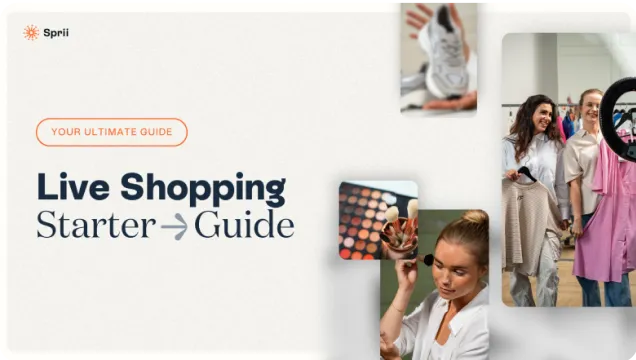
Unleash the power of Live Shopping with Sprii's 5-part bootcamp series!
%201.webp)
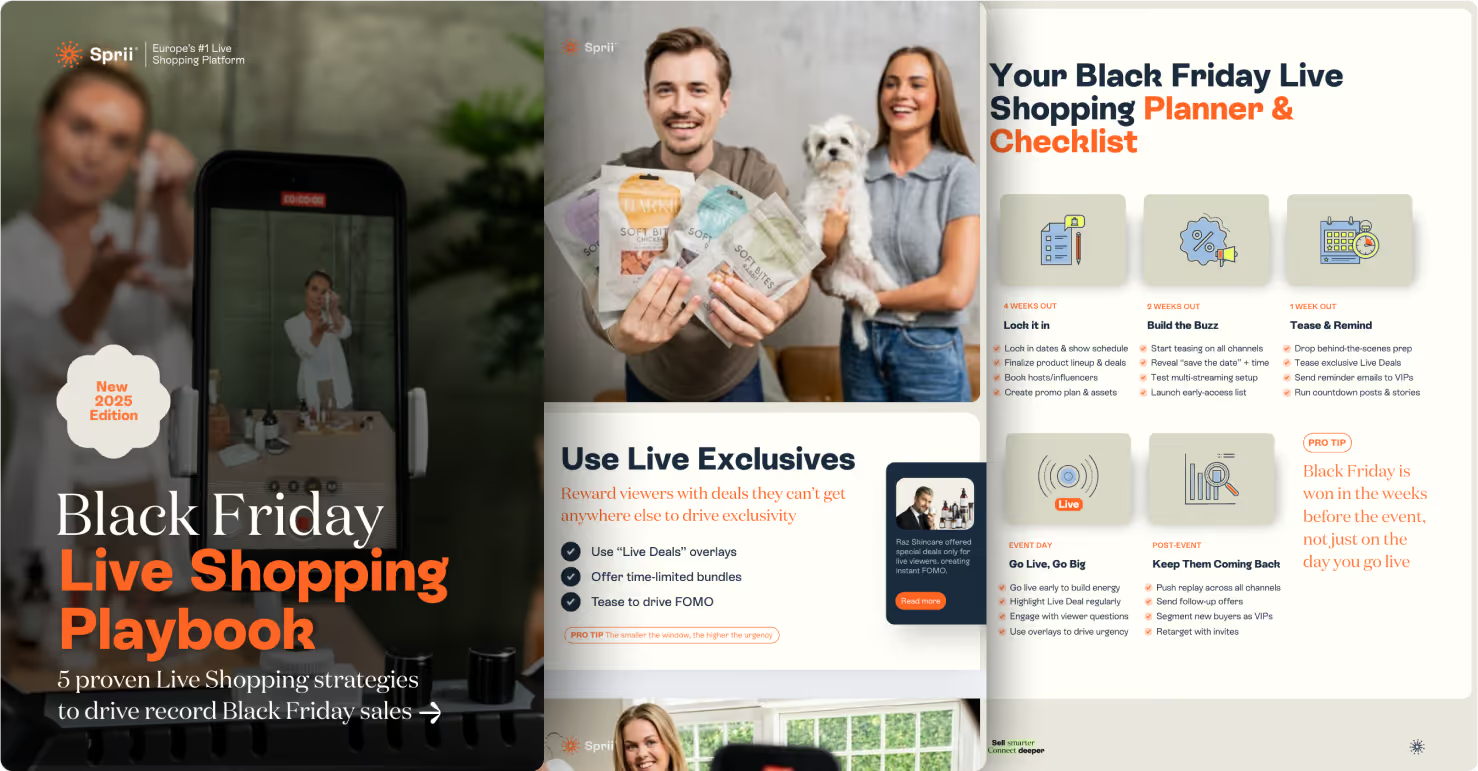
Win the retail rush with this playbook packed with Live Shopping strategies
.webp)
Learn how they compareand discover the 12 key industry benchmarks.
.webp)
BLACK FRIDAY WEBINAR
Learn how leading retailers leverage Live Shopping on Black Friday

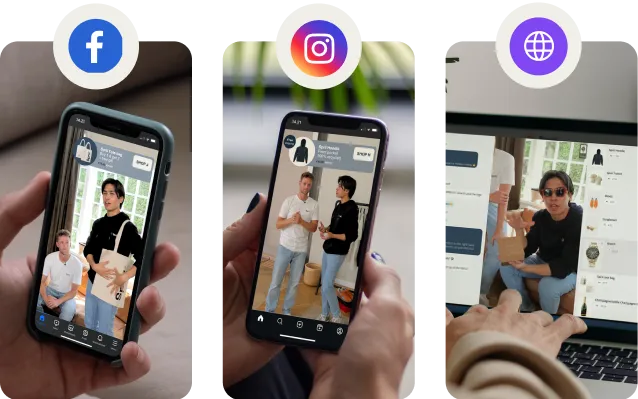
See how a Sprii-powered Live Shopping event works on FB, IG and your website
BLACK FRIDAY WEBINAR
Learn about 5 Live Shopping strategies to dominate Black Friday

Master Live Shopping—from audience targeting to driving sales.
5 proven plays to win Black Friday and Black Month with Live Shopping
in under 5 minutes

in under 5 minutes
See How Sprii Works
%201.avif)
See How Sprii Works
Inside Live Shopping
%201.avif)
Inside Live Shopping
.avif)


.webp)
.avif)