Live Shopping: what it is, how it works and how to start
Live Shopping is a digital sales format, and a form of video commerce, where brands promote and sell products through live video streams.
A host shows the products, viewers ask questions in the chat, and they buy without leaving the stream. Brands run shows on social media, on their own website, or on both at once.


What is Live Shopping?
Live Shopping (also called live commerce, livestream shopping, live selling or liveshopping) is selling products in a live video broadcast where viewers can ask questions and buy while they watch. During a shoppable live stream, a host presents products, answers questions, and interacts directly with viewers. This creates a one-to-many experience where hundreds or even thousands of viewers can watch and shop at the same time. Some call it shoppertainment: part show, part shop.
Some formats also enable one-to-one video chat, where a store expert advises a single shopper, often called concierge shopping. That is closer to a personal shopping appointment than a show.
Live Shopping is not entirely new. It evolved from traditional home shopping channels like TV retail shows, where viewers had to call in to place orders. The digital version took off in China in 2016, when Taobao Live linked live streams to the Taobao marketplace checkout. The difference today: viewers talk back in the chat and buy in a few taps, on the device they are already watching on.
The terms you will meet:
- Host: The person presenting the products, often a store employee, founder or creator.
- Shoppable overlay: Product cards shown on the video that viewers tap to add to cart.
- Comment-to-buy: Viewers comment a product code on a social stream to reserve the item, then complete the purchase through a checkout link.
- Multistream: One broadcast sent to your website, Facebook and Instagram at the same time.
- Replay: The recorded show, kept shoppable after the live stream ends.
How does Live Shopping work?
A Live Shopping show follows the same six steps whether you sell on social media or on your website.
There are two technical set-ups. Wikipedia separates built-in social livestreaming, where commerce is an added layer, from dedicated Live Shopping platforms built around the transaction. Most shows run 30 to 90 minutes.
Where can you host Live Shopping: social media or your website?
You can host Live Shopping on social media, on your own website, or on both at the same time. Social gives you reach. Your website integration gives you control of the checkout and the customer data. Most brands we work with multistream from one livestream shopping platform to get both.
Can you still do Live Shopping on Facebook and Instagram?
Yes, but not with Meta's own shopping tools. Meta shut down Facebook Live Shopping in October 2022 and Instagram Live Shopping on 16 March 2023, removing product tagging in live videos. Going live on both apps still works, but selling is a lot of hassle without a Live Shopping platform built for social commerce.
Live Shopping platforms such as Sprii add the selling layer back and make live social shopping work again: viewers comment to buy during a Facebook or Instagram Live, and the order flows into your shop. TikTok is the exception. According to Vimeo, TikTok Shop works as a Live Shopping marketplace with in-stream buying in the US, UK and several other markets as of 2026.
What are the most popular Live Shopping formats?
The format follows the goal. Demos and Q&As sell products that need explaining. Campaign shows and auctions create urgency. Recurring shows build a loyal audience and steady customer engagement.
- In-depth product demonstrations and tutorials. Best for beauty, electronics and anything with a learning curve.
- Influencer-led shows. Borrow an audience you do not have yet: this is influencer marketing that sells on the spot.
- Campaign-driven live shows. Black Friday, launches and seasonal or exclusive drops.
- Interactive Q&A sessions. Clear up objections on fit, size or use.
- Live auctions for exclusive or limited products. Collectibles, one-offs and end-of-line stock.
- Recurring live stream sales to build loyal audiences. The same slot every week, so viewers make it a habit.
- One-to-one personal shopping (concierge shopping). A video call between a store expert and a single shopper. Best for jewellery, luxury and other high-consideration buys.
Why does Live Shopping convert better than e-commerce?
Live Shopping converts better because it answers the buyer's questions at the moment they decide. McKinsey reports that companies see live commerce conversion rates approaching 30%, up to 10 times conventional e-commerce. Sprii puts the range at 10% to 40%, an average across the 72,000+ live shows we've run, against 2% to 3% for standard product pages (Vimeo).
Three things drive it:
- Questions answered live. Viewers can ask questions and receive immediate answers through live chat, so doubts on size, fit or quality do not end in an abandoned cart.
- Urgency. Limited-time offers, flash deals, and social proof encourage impulse buying. Other viewers buying in the chat is social proof you cannot fake on a product page.
- Trust. Viewers see the product move, fit and work on a real person, unedited.
Results from Sprii users: Mys by Mari from 1.5% to 53% conversion, EYDA from 5% to 10%, and Hobbii 5x the conversion of its paid social ads.
What the numbers mean. A 30% conversion rate is measured on viewers who chose to watch, not on all your site traffic. It shows how well a show sells to an interested audience. Judge a show on revenue per show and new customers, not on conversion alone.
Does Live Shopping reduce returns? Evidence is mixed. Some studies find lower returns because buyers see the product properly. Others find more impulse buys. On Sprii, return rates on Live Shopping orders are as low as 10%.
Which products and industries work well for Live Shopping?
Live Shopping works best for products that sell better when shown: how they fit, move, feel or work. These are the categories where Sprii users go live.
These are the most common, but most industries can make Live Shopping work. If a product is easier to understand when someone shows or explains it, it can sell in a live show. None of them need a studio. A smartphone is enough for the first show.
How do you start with Live Shopping?
You can run your first Live Shopping show in a few weeks with a smartphone, 10 to 20 products and a host who knows them. Seven steps:
- Set one goal. Pick a single number for the first show: revenue, new customers or clearing a category.
- Select a pilot group of 10 to 20 products. Choose items that are easier to sell when shown: fit, texture, size or how they work.
- Choose a platform: social media, your website, or both through multistreaming.
- Source a host. A colleague who knows the products often beats a celebrity. A live shopper wants honest answers.
- Set up the kit. At a minimum, you need a smartphone, a ring light and a stable internet connection with a backup solution, such as a 4G or 5G hotspot.
- Promote the event through your existing email and social channels, starting a week before. Send a reminder an hour before you go live.
- Go live, then reuse. Keep the replay shoppable on your site and cut clips for social.
During the show: greet viewers by name when you answer them, run a poll or quiz to keep the chat going, put a countdown on offers and say when stock runs low. Within 24 hours, follow up with buyers and send the replay to everyone who signed up.
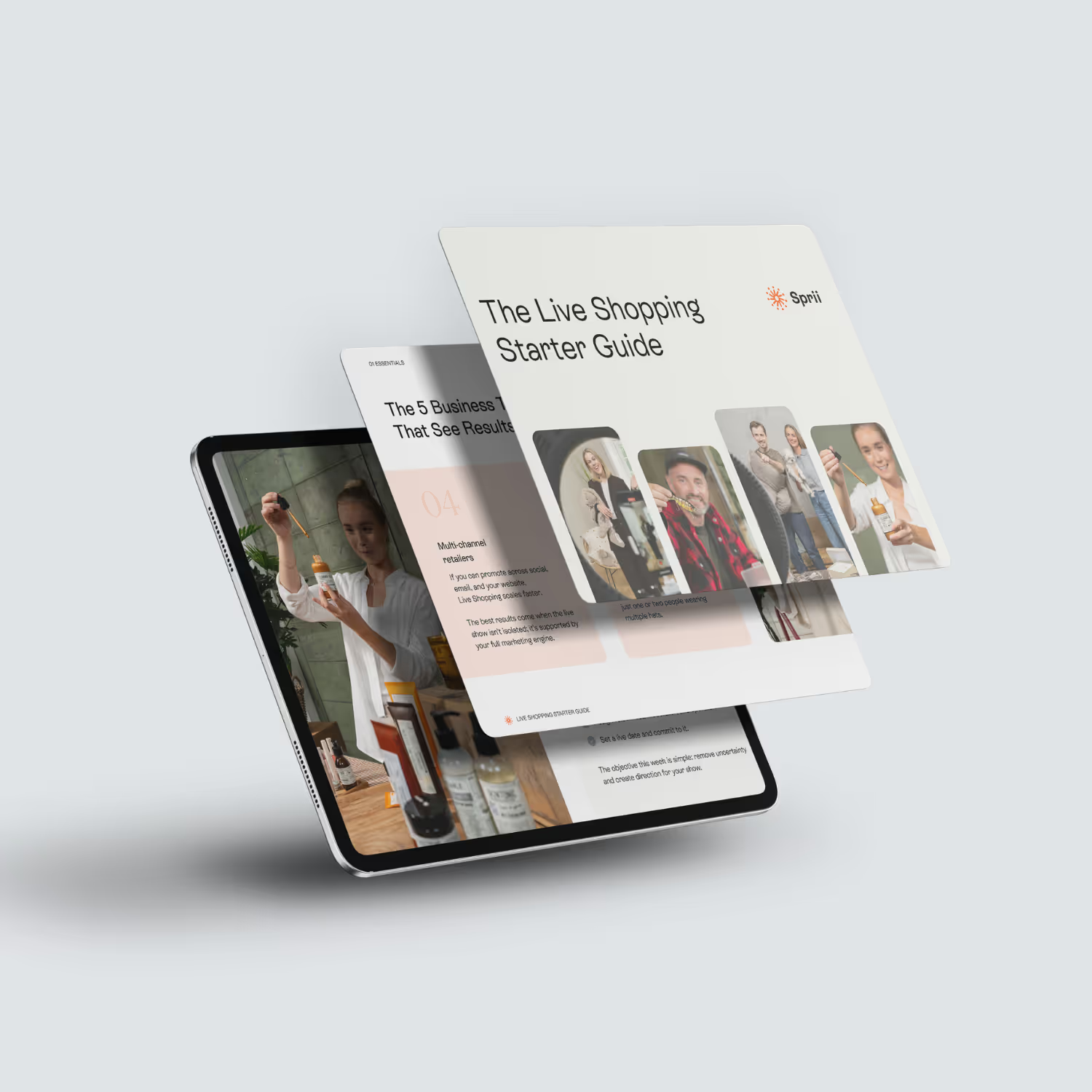
Our Live Shopping Starter Guide covers each step in more detail.
Which KPIs should you track?
Track revenue per show and viewer-to-buyer conversion first. Views alone do not tell you whether a show worked.
How do you choose a Live Shopping platform?
Choosing the right Live Shopping app or platform is one of the most important decisions you'll make when building your Live Shopping strategy. Most live stream shopping apps look alike on a feature list. Check these:
- Channels. Can you stream to your website, Facebook and Instagram at once?
- Checkout. Does it offer an integrated checkout and connect to your shop system, such as Shopify, WooCommerce, Magento, Salesforce Commerce Cloud or PrestaShop?
- Comment-to-buy. Can viewers on social buy by commenting?
- Replays and clips. Do shows keep selling after they end?
- Support. Who helps you plan and run your first shows?
- Engagement tools. Can you run polls, quizzes and competitions to keep viewers watching?
Compare the options in our guide to Live Shopping platforms.
What results do brands get from Live Shopping?
Live Shopping works for enterprise retailers and small boutiques alike. Results from Sprii users:
What the platform roundups don't tell you
Most Live Shopping guides repeat the same conversion stat and the same platform list. Here is what we see in shows run on Sprii.
- Replays keep selling. Intersport's clearance show reached 14,346 views across live and replay. Coop saw conversion stay high in the week after its show.
- Your own people make strong hosts. Elgiganten had its own e-commerce campaign specialist host its first show. At Mor & Dotter, the two founders present every product themselves.
- Consistency beats one-offs. Mor & Dotter's 250+ shows now drive 33% of its turnover. Kenja's weekly shows bring in 40% of its total revenue.
- Shows bring in new customers. Ormsson reached 52% new customers with its first show. At Kødriget, half the buyers at every show are new.
Frequently asked questions about Live Shoppinh
Is Live Shopping the same as live commerce?
Yes. Live Shopping, live commerce, livestream shopping and live selling describe the same thing: selling products in a live video. "Live commerce" is sometimes used more broadly to include video commerce and shoppable video that is not live.
How long should a Live Shopping show be?
Most shows run 30 to 90 minutes. On Sprii, the median show runs 40 minutes. Start shorter, and keep the replay up for viewers who missed it.
Can Live Shopping help sell products that aren't performing well?
Yes. Live Shopping is highly effective for underperforming products because it allows a host to provide the context, demonstrations, and real-time answers to objections that a static product image cannot offer.
Does Live Shopping work in Europe?
Yes. Sprii has powered 72,000+ Live Shopping events for 3,000+ brands, most of them in Europe. Retailers such as JYSK, POWER and BabySam run shows in the Nordics.
How much does Live Shopping cost?
You can start on social media with a smartphone and no software cost. Selling on your website or multistreaming needs a Live Shopping platform, priced by plan. See Sprii pricing.
Can I do Live Shopping on TikTok?
Yes, in markets where TikTok Shop is available, including the US and UK. You sell through TikTok's own checkout, so TikTok holds the customer relationship.
Can small brands do Live Shopping?
Yes. You need a smartphone, a handful of products and someone who knows them. Nordic boutique Kattnakken raised basket value by 265% with Live Shopping, and at Mor & Dotter, where the two founders host every show, Live Shopping now drives 33% of turnover.
What equipment do I need for Live Shopping?
A smartphone, a ring light, a clip-on microphone and a stable internet connection with a backup, such as a 4G or 5G hotspot. A second device to follow the chat helps the host keep up with questions.
What is the best Live Shopping app?
The best livestream shopping app is the one that sells where your customers already are. TikTok Shop has its own in-app checkout, but TikTok keeps the customer. A live stream shopping platform such as Sprii runs the show on your own website and multistreams it to Facebook and Instagram, so you keep the checkout and the data.
About the author. Katrine Nørgaard is Content Marketing Specialist at Sprii. Before joining Sprii, she hosted more than 50 Live Shopping shows for Zizzi. Now she helps brands go live. Full bio.
Experience Live Shopping with Sprii: Watch a demo · Calculate your revenue
Use our Live Shopping calculator to see how much you could earn.

you could possibly earn
you could possibly earn
Unleash the power of Live Shopping with Sprii's 5-part bootcamp series!

Master Live Shopping—from audience targeting to driving sales.
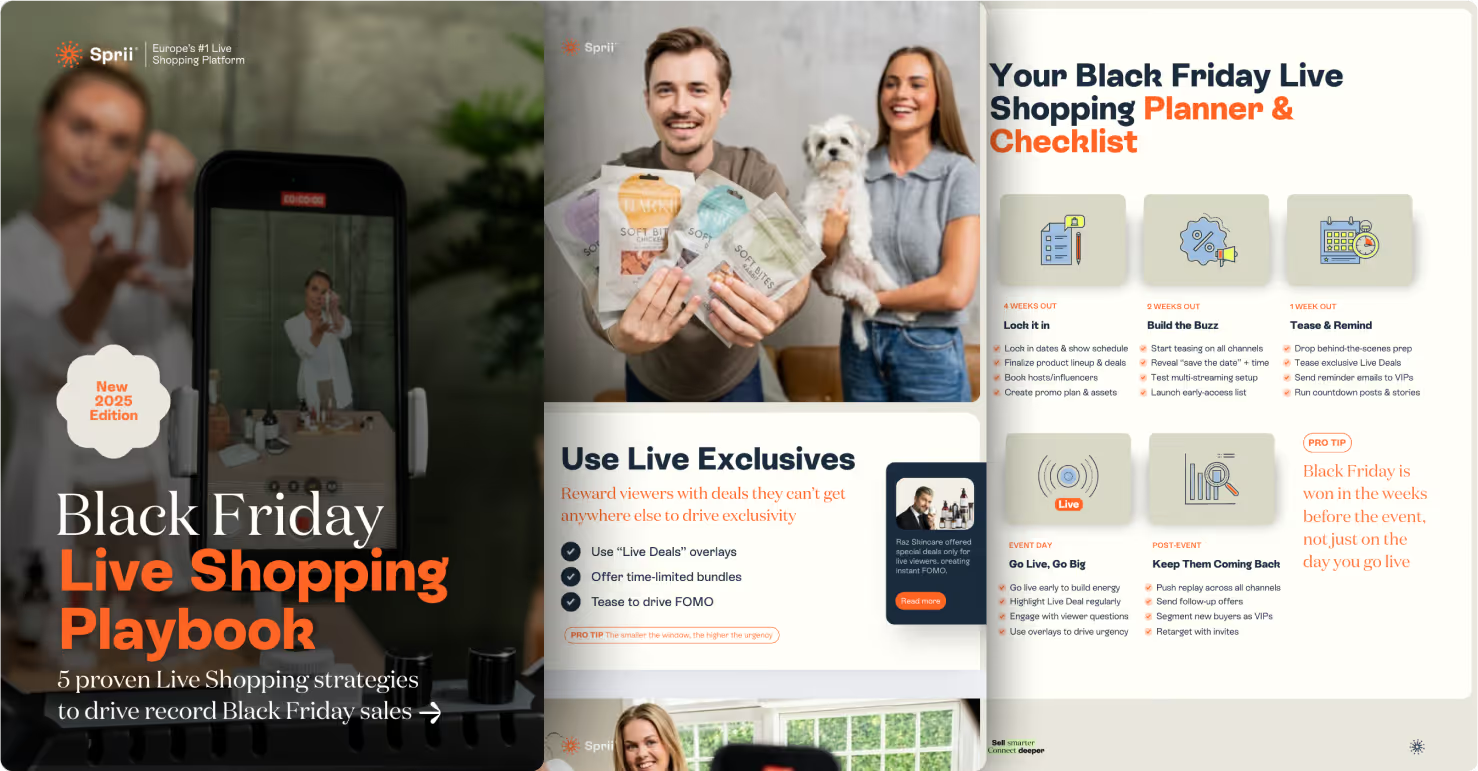
5 proven plays to win Black Friday and Black Month with Live Shopping
in under 5 minutes
in under 5 minutes
See How Sprii Works

See How Sprii Works
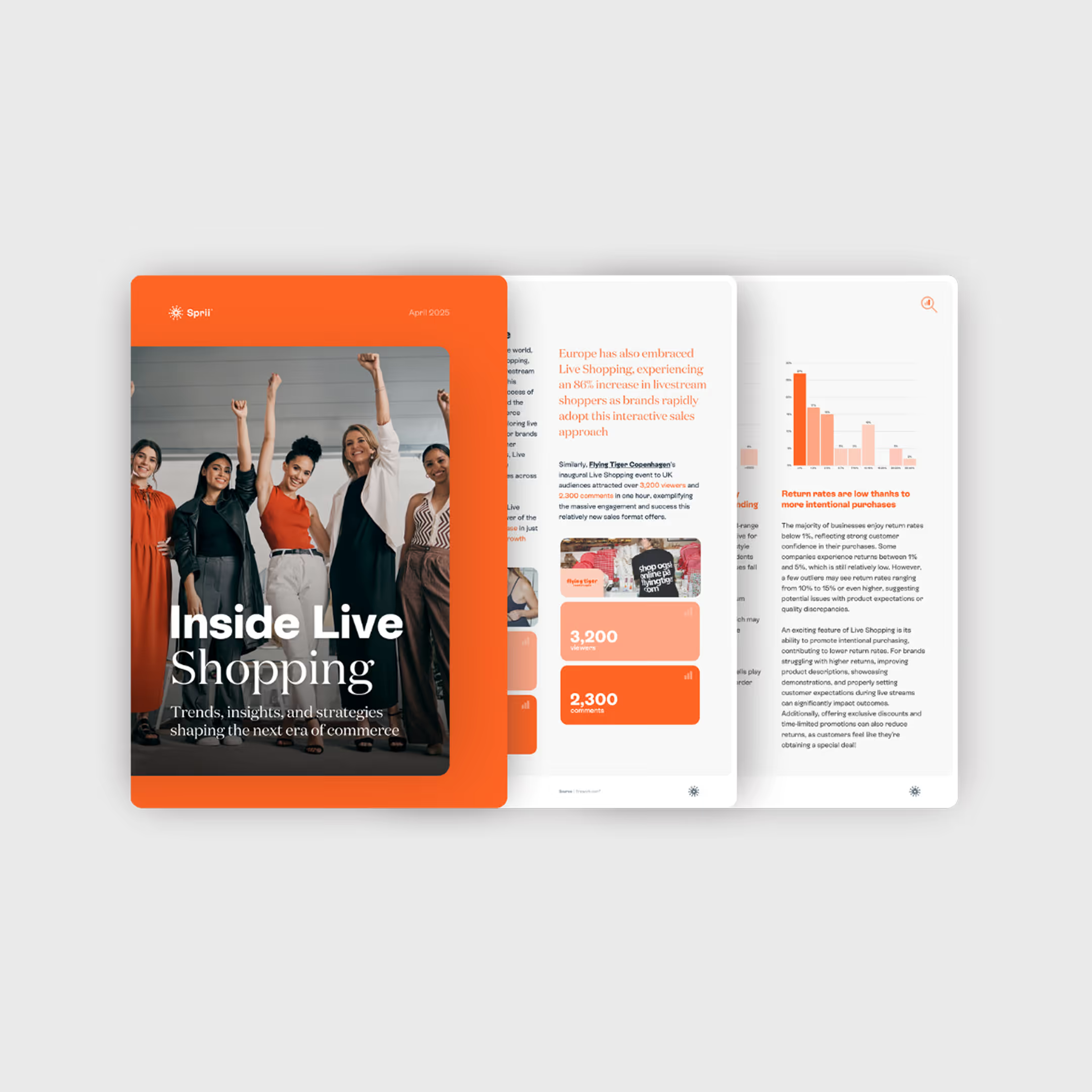
Inside Live Shopping