Video shopping: What it is, how it works and why it matters
Shopping should be interactive, not a passive scroll through a static webshop. Video shopping bridges that gap, letting customers discover and buy products directly through the videos they love—whether it's a high-energy live show or a simple, authentic product demo.
%20(400%20x%20150%20px)%20(5).webp)

Video shopping has moved well past novelty. For a growing number of European retailers, it is now a core sales channel, one that sits at the intersection of content, commerce, and real human connection.
Instead of watching first and shopping somewhere else afterwards, the two experiences become one.
This page covers the main formats, the business case, the strategy that makes it work, and the metrics worth tracking. It also covers how you can use a platform like Sprii to build an effective video marketing strategy, making it easy for brands to turn video content into revenue.
What video shopping actually is
Video shopping is an e-commerce experience where shoppers discover, evaluate, and purchase products directly inside a video. It can be by using interactive layers (overlays) — tappable hotspots, product cards, and add-to-cart buttons.
Interactive elements such as product cards, clickable products and add-to-cart buttons make it possible to move from “I like that” to “I’ll buy that” without breaking the viewing experience.
Video Shopping removes the need to navigate to a separate product detail page, compressing the path from interest to checkout into a single screen. The result is an immersive shopping journey that feels immediate rather than fragmented.
.webp)
Different terms worth knowing and seperating:
The term overlaps with a few related concepts that a silimar but worth distinguishing.
- Video commerce is the broader business model: using video as a primary sales driver across a brand's digital presence.
- Shoppable video describes the technical format — a video with embedded purchase mechanics.
- Live commerce or Live Shopping is the real-time variant, where a host broadcasts live and viewers buy during the stream.
In video shopping, the core mechanic is consistent across all formats: buying intent and buying action happen in the same moment, eliminating the friction that causes drop-off between a product view and a completed order.
That matters because 63% of consumers prefer to learn about a product through video over text, infographics, or sales calls, making video the natural point of sale, not just a marketing asset.
Why shoppers prefer buying through video
Static product photography can show a garment on a hanger.
Whereas video shows how it moves on a real person, how a kitchen appliance acutally works , or how a beauty product applies across different skin tones.
That shift in information quality is the foundation of why shoppers increasingly choose to shop with video rather than browse a conventional webhop.
The data backs it up - the livestream commerce market alone is estimated to reach $3.7 Trillion.
Beyond giving customers a more in-depth product demonstration, video shopping also makes the buying process more convenient. Consumers can explore and shop products from any device, wherever they are, without visiting a physical store.
It can also help customers move through the buying journey faster. Helpful pre-recorded videos and demonstrations answer many of the questions that might otherwise delay a purchase, giving shoppers a better understanding of the product before they reach checkout.
Live shopping takes this one step further by adding real-time interaction to create a more personalized shopping experience. Viewers can ask questions about sizing, fit, features, or functionality and get answers while they watch. It brings some of the trusted guidance of an in-store shop assistant into the online shopping experience.
That added confidence can continue after the purchase, too. Return rates for purchases made through live video can fall below 10%, compared with the 20–30% often seen in traditional e-commerce.
For categories such as fashion, beauty, and home goods, video shopping helps close the gap between the personal guidance of an in-store experience and the convenience of buying online.
Revenue and retention gains for retailers doing video shopping
Retailer and brands using video shopping experience measurable lifts across their sales funnel, and the gains and rewards show up in more than just conversions. There are several reasons why doing vidoe shopping is a good business case:
Higher conversion rates. Live shopping events on a Live Shopping platform like Sprii delivers more than 50%+ conversion rates, driven by urgency, trust-building, and integrated checkout.
That is a significant step up from what most brands see through static product pages.
Lower returns. Real-time product demonstrations either from video shopping reduce return rates to below 10%, compared to the 20–30% industry average. Lower returns directly protect margin and reduce the operational cost of processing and restocking goods.
Wider reach without multiplying effort. A single live stream can run simultaneously on Facebook, Instagram, and a brand's own website. Audience multiplies; workload does not.
Lower operational costs. Video Shopping gives customers an engaging shopping experience without the costs of running physical stores, showrooms, or pop-ups.
Brand authority over time. Consistent, high-quality live events build customer trust and loyalty in ways that paid advertising cannot replicate.
81% of marketers report that video has directly impacted sales. For European retailers across fashion, beauty, home goods, and food, these gains compound as the video shopping habit becomes established with their audience.
Five video shopping formats worth knowing
Video shopping can take many forms, and choosing the right shoppable video format depends on what you want to achieve.
Some formats are built to drive sales in the moment, while others help customers discover products, understand them better, or feel more confident before buying.
Here are five of the most common formats and where each one works best.
Live shopping: A real-time broadcast where a host presents products, answers questions, and interacts with viewers while they shop. It works especially well for product launches, seasonal campaigns, exclusive offers, and events where you want to create excitement and drive sales in the moment.
McKinsey reports live commerce conversion rates approaching 30%, which is up to ten times conventional e-commerce. To understand how live shopping works in practice, is acutally quite easy: It combines real-time engagement, visible product cards, and a seamless in-player checkout flow, allowing people to check-out without leaving the stream.
Pre-recorded shoppable video: Short, pre-recorded videos that customers can watch and shop directly from at any time. Products are linked or tagged in the video, making it easy to move from watching to buying. Unlike Live Shopping, these videos can keep working around the clock without a host being live, making it the backbone of any always-on content strategy.
Product demo videos: Show customers how a product looks, works, fits, or performs in real life. They’re particularly useful for products that benefit from a little more explanation, such as electronics, beauty products, kitchen appliances, or fashion.
These are the closest equivalent to an in-store product demonstration, and they work particularly well on high-intent pages.
Influencer and creator videos. Put products in the hands of people your audience already knows and trusts. Brands can use creator content not only on social media, but also as shoppable video on their own website — bringing authentic recommendations closer to the point of purchase.
Influencer marketing has long driven discovery on social media; the step forward is making those clips shoppable on a brand's own site, so the reach of influencer content translates directly into on-site conversion.
Unboxing videos. Honest first impressions captured on camera can make a world of difference. Unboxing videos function as social proof in motion, they answer the question "what is it actually like to receive and open this product?" in a way no product description can.
For successful live commerce examples across these formats, the pattern is consistent: authenticity and product clarity outperform production polish every time.
.webp)
Choosing the right video shopping platform
Integrating video shopping into you existing e-commerce can either be easy or extremely difficult depending on your video shopping platform choice. It determines what formats are possible, how much technical effort is required, and how well the experience integrates with existing e-commerce infrastructure.
Here's 5 things you need to evaluate before deciding on a platform:.
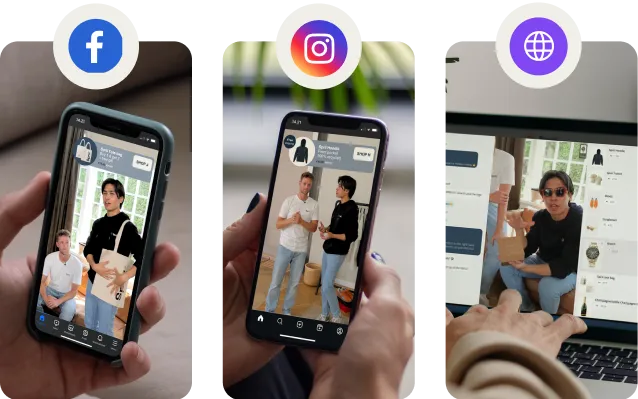
Multistream broadcasting. Can you reach customers wherever they prefer to watch? Look for a platform with robust social media integration that lets you stream across various networks and your own website without running separate broadcasts. With Sprii, retailers can go live on Facebook, Instagram and their website simultaneously from one setup.
E-commerce integration. Video shopping shouldn't create another system for your team to manage. Your platform should connect with your existing webshop and keep products, inventory and orders synced.
Sprii integrates with Shopify and WooCommerce, so the video shopping experience stays connected to your existing ecommerce setup while also allowing shoppers to complete purchases without leaving the video which is the definition of a frictionless checkout experience.
Shipping provider integration. Connections to carriers like GLS, Shipmondo, and CoolRunner automate order fulfilment from the moment a live sale closes, reducing manual processing and speeding up dispatch.
Analytics. Views only tell you so much.. Real-time performance dashboards let retailers track conversion rates, revenue per viewer, and engagement during and after each event. Without this data, it is impossible to know what is working or where to improve.
Support infrastructure. Onboarding, strategy sessions, production assistance, and 24/7 technical support reduce the learning curve for new hosts significantly and allows you to implement video shopping without any issue.
Sprii is trusted by 3,000+ brands and retailers across Europe and won 'Best E-commerce Tool' at the 2023 Danish E-commerce Awards, so picking it would leave you in safe hands.
For a broader comparison, take a look at our guide to the best Live Shopping apps and see how the different platforms stack up.
Six practices that turn views into revenue
Good video shopping isn't about having the biggest production budget. It's about showing the right content, in the right place, at the right time. That strategy is what separates video shopping programmes that drive revenue from those that merely add motion to a page.
Place shoppable video on high-intent pages. Product pages are an obvious place to start. A short demo, styling video or customer review can answer those final questions when someone is already considering a purchase. Position the video above or beside the buy button so it reaches shoppers at the exact moment they are deciding. Placing video on the homepage and category pages, on the other hand, are great for inspiration and product discovery.
Repurpose existing content. Reuse your exisiting top-performing content from Instagram Reels, TikToks, and user-generated content rather than filming from scratch. This removes the most common reason brands delay launching video shopping — the assumption that new video requires new production. It doesn't you can simpy use what you already have.
Match format to the customer journey. Influencer and unboxing videos work well for guided discovery on homepages and collection pages, helping shoppers find products through trusted voices. Demos and tight product clips work on product pages where shoppers are deciding. Using the right format in the right place is a simple change that meaningfully improves performance. Live Shopping can combine both — helping people discover products, ask questions and buy in the same experience.
Keep clips concise. Lead with the product benefit in the first three seconds and keep on-site clips under one minute. Add captions for viewers watching without sound — a large share of mobile-first experience users never turn audio on.
Make the purchase action obvious. Use a visible product card and a clear add-to-cart button at the exact moment the product appears on screen. If the path to purchase requires effort, shoppers will not take it.
Measure before scaling. Compare conversion rate and average order value on video pages against matched control pages, then expand to more SKUs once lift is confirmed. Scaling without measurement is how shoppable video budgets get wasted.
.webp)
Conversion benchmarks and what to measure
Video shopping consistently outperforms static product content across key metrics such as conversion rates and returns.
McKinsey reports live commerce conversion rates approaching 30% — up to ten times conventional e-commerce. Wyzowl's 2026 survey found 85% of consumers have been convinced to buy after watching a video. While Sprii customers can see 50%+ conversion rates during Live Shopping events and return rates below 10%.
But benchmarks only tell part of the story.
What really matters is whether video improves your ecommerce performance. Here are the metrics worth watching:
Conversion rate. How many viewers actually become customers?
Revenue per viewer. How much revenue does each viewer generate?
Add-to-cart rate. How often does watching a video lead to buying intent?
Return rate. Are customers who buy through video making more informed purchase decisions?
Repeat viewers. Are people coming back for your next show or watching more of your video content?
Don't worry about matching someone else's headline conversion rate. Start with your current ecommerce performance, introduce video and measure the difference.
That's how you find out what works for your products and your customers — and what you should do more of.
Want to dig deeper into the numbers and mechanics? Read our guide to live commerce.
{{master-live-shopping-banner-beige}}
Going live does not require a full production studio
One of the most persistent misconceptions about video shopping is that it requires professional video production. In practice, authenticity outperforms polished videos - especially in video commerce.
You don't need a professional studio to get started with video shopping.
For Live Shopping, a smartphone, good lighting and someone who knows the products can go a long way. In fact, the slightly unpolished nature of live video is often part of what makes it work. Real hosts, real product demonstrations and real questions from customers make the experience feel human.
And you probably already have more pre-recorded videos and useful content than you think.
Instagram Reels, TikToks, creator content, customer reviews and unboxing videos can all be reused as shoppable content on your website. With Sprii, you can also go live from a single device and stream to Facebook, Instagram and your website at the same time.
The same goes for short-form video. A simple 30-second product demo filmed in your stockroom can be more useful than a polished campaign video if it answers the questions customers actually have.
So start simple. Show the product clearly. Know what you're talking about. And build from there.
Sprii provides onboarding, strategy and production support to help retailers get started — even if they've never gone live before.
Want to see what that looks like in practice? Read our guide to livestream shopping.
{{demo-banner-beige}}
Frequently asked questions
What platforms are best for video shopping?
The best platform depends on where your audience already spends time and how much technical complexity you can manage.
For European retailers, a dedicated live shopping platform like Sprii is the most efficient choice because it lets you multistream simultaneously to Facebook, Instagram, and your own website from a single device, while handling automated checkout, inventory sync, and order management in one place.
Sprii integrates natively with Shopify and WooCommerce, and connects to shipping providers including GLS, Shipmondo, and CoolRunner. Social platforms alone — Instagram Live, Facebook Live — provide reach but lack the checkout automation and analytics that turn a broadcast into a measurable sales channel.
Is video shopping the same as Live Shopping?
Not exactly. Live Shopping is one specific format within the broader category of video shopping.
Video shopping covers any experience where shoppers can discover and purchase products through video — including pre-recorded shoppable clips, product demos, influencer videos, and unboxing content.
Live shopping is the real-time variant: a host broadcasts live, viewers interact through comments and questions, and purchases happen during the stream.
Live shopping typically delivers the highest conversion rates — McKinsey reports figures approaching 30% — because of the urgency and direct interaction it creates, but pre-recorded shoppable video is the always-on workhorse format that converts around the clock without requiring a live host.
How do I start video shopping as a retailer?
Getting started does not require a production studio or technical expertise. Choose a Live Shopping platform that also provides video shopping features and that integrates with your existing e-commerce setup — Sprii connects to Shopify and WooCommerce and supports simultaneous streaming to Facebook, Instagram, and your website while offering video shopping in form of comment selling and website shoppable videos.
Plan a short first event focused on a handful of products, ideally items that benefit from demonstration such as fashion, beauty, or kitchen goods. Go live from a smartphone — authenticity matters more than production quality in live commerce.
Use the platform's automated checkout and inventory management so orders are captured without manual effort. Review your analytics after the event and use the data to refine your next session. Sprii provides onboarding, strategy sessions, and 24/7 technical support to help retailers launch confidently from day one.
What conversion rates can I expect from video shopping?
Conversion rates vary by format, category, and how mature your Live Shopping programme is.
McKinsey reports live commerce conversion rates approaching 30% — up to ten times conventional e-commerce. Sprii clients achieve 50%+ conversion rates on live shopping events. Pre-recorded shoppable videos typically deliver lower but still meaningful lifts over static product pages. The most reliable approach is to run a clean before-and-after test on a set of product pages, compare conversion rate and average order value, and scale from there. Return rates are also a key metric: live product demonstrations reduce returns to below 10%, compared to the 20–30% typical of standard e-commerce.
Which product categories work best for video shopping?
Video shopping works best for categories where seeing a product in motion answers questions that photos cannot. Fashion and apparel benefit enormously — viewers can see how a garment drapes, moves, and fits on a real person, which reduces both purchase hesitation and returns.
Beauty and health products suit live demonstrations where a host can show application technique and answer questions about skin type or shade matching in real time.
Home and kitchen goods, electronics, fitness equipment, baby and kids products, pet care, and food and beverage all perform well for similar reasons: the product's function, scale, or texture is easier to communicate through video than through static images.
How does video shopping reduce product return rates?
Returns in standard e-commerce are typically driven by unmet expectations — the product looks or functions differently than the photos suggested.
Video shopping addresses this at the point of purchase. When a host demonstrates a garment on a real person, shows a kitchen appliance in use, or answers live questions about sizing and materials, shoppers buy with a much clearer understanding of what they are getting. This is why Sprii clients see return rates fall below 10%, compared to the 20–30% industry average for conventional e-commerce. Lower return rates directly protect margin and reduce the operational cost of processing and restocking returned goods.
Do I need professional video equipment to run live shopping events?
No. The most successful live shopping hosts often use a smartphone rather than professional broadcast equipment. Authenticity and genuine product knowledge matter far more to viewers than production polish. A well-lit space, a clear audio setup, and a reliable internet connection are the practical requirements.
Sprii is designed to run from a single device, enabling simultaneous multi-streaming to Facebook, Instagram, and your own website without additional hardware. For retailers who are new to live video, Sprii also provides onboarding support, strategy sessions, and production assistance to help hosts build confidence and structure their first events effectively.
Use our Live Shopping calculator to see how much you could earn.

you could possibly earn
you could possibly earn
Unleash the power of Live Shopping with Sprii's 5-part bootcamp series!
%201.webp)
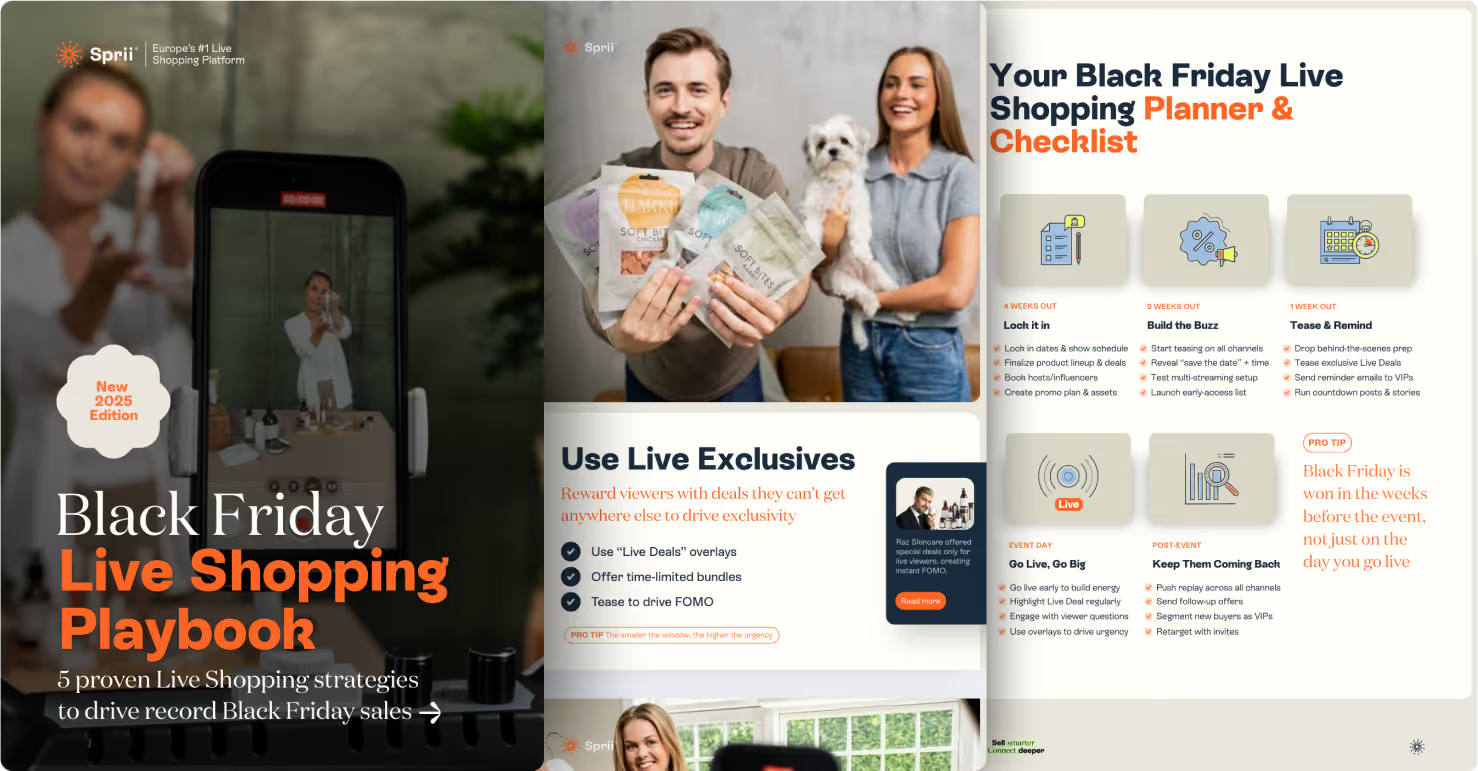
Win the retail rush with this playbook packed with Live Shopping strategies
.webp)
Learn how they compareand discover the 12 key industry benchmarks.
.webp)
BLACK FRIDAY WEBINAR
Learn how leading retailers leverage Live Shopping on Black Friday

See how a Sprii-powered Live Shopping event works on FB, IG and your website
BLACK FRIDAY WEBINAR
Learn about 5 Live Shopping strategies to dominate Black Friday

Master Live Shopping—from audience targeting to driving sales.
5 proven plays to win Black Friday and Black Month with Live Shopping
in under 5 minutes

in under 5 minutes
See How Sprii Works
%201.avif)
See How Sprii Works
Inside Live Shopping
%201.avif)
Inside Live Shopping
%20(8).webp)

%20(12).webp)

%2520(1).webp)
.avif)